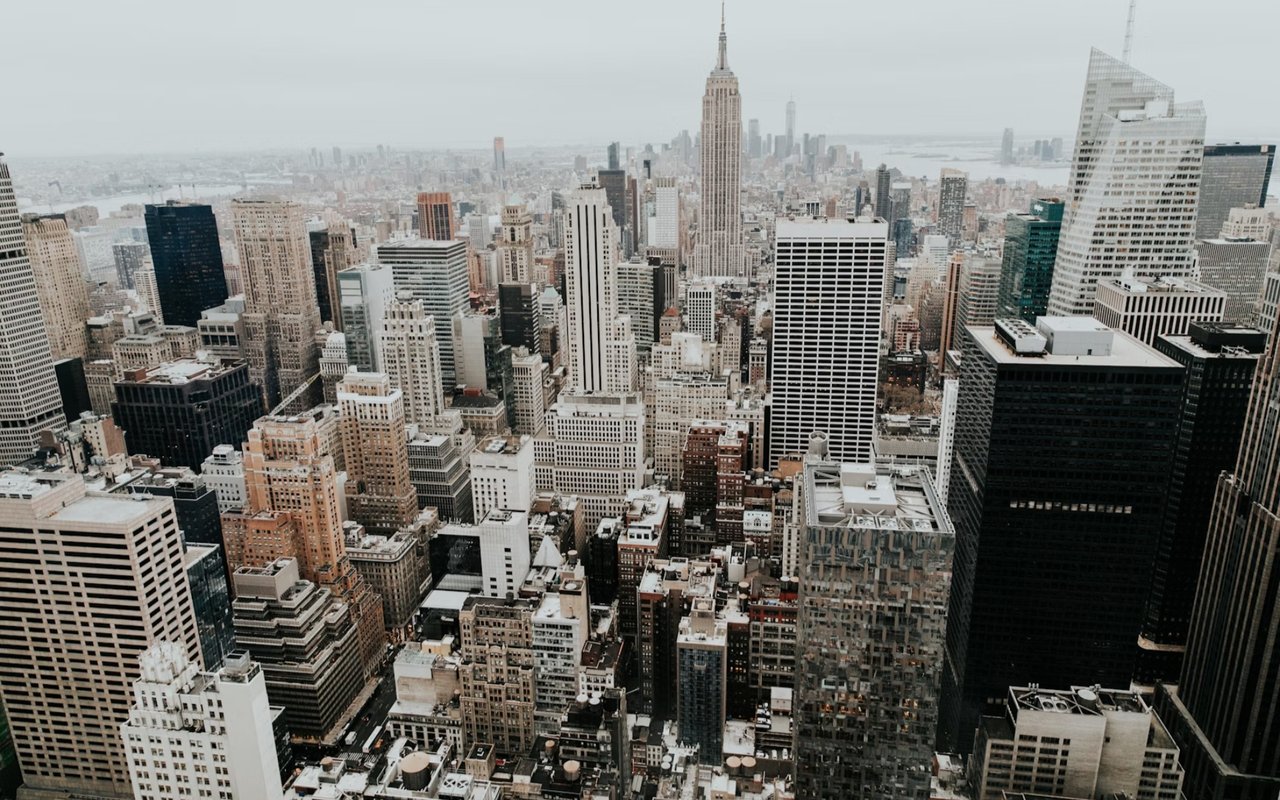
New York City doesn't ease you in. From the moment you arrive, the city demands your attention — its pace, its noise, its scale. But for the 8.5 million people who call it home, that energy is exactly the point.
If you're considering a move, this guide gives you an honest, ground-level picture of what living here actually looks like in 2026 — the costs, the neighborhoods, the commutes, and the things no one tells you until after you've signed a lease.
The Real Cost of Living in NYC
Housing will be your biggest expense, and it varies dramatically depending on which borough you choose.
As of early 2026, Manhattan's median rent has hit $4,950/month — a new record, up 9% from last year. Brooklyn sits at $4,000 (flat year-over-year), while Queens offers more breathing room at $3,100. The Bronx and Staten Island are the most affordable at $2,250 and $2,450 respectively. Worth noting: "prime" Brooklyn neighborhoods like Williamsburg and DUMBO often exceed Manhattan's median, with some zip codes averaging $4,800+.
Beyond rent, budget for utilities running $200–$290/month for a one-bedroom, groceries running 25–35% above the national average, and an unlimited transit pass that now costs approximately $140/month under the OMNY fare cap system.
A realistic monthly budget looks like this:
For a single person, expect $4,800–$6,500/month total, covering a studio or one-bedroom, transit, groceries, and a modest social life. A family of four should budget $10,500–$15,000+, with childcare alone adding $1,500–$3,500 depending on the borough and age of your children.
One financial benchmark worth knowing: to live comfortably in a desirable neighborhood — using the standard 50/30/20 rule — you generally need a household income of $135,000 or more.
Choosing Your Neighborhood
This is the most consequential decision you'll make. NYC isn't one city — it's five boroughs, dozens of distinct neighborhoods, and wildly different lifestyles within a single subway ride of each other.
Here's a snapshot of seven key areas based on 2026 data:
Upper West Side, Manhattan — Median home price: $1,350,000 | Median 1BR rent: $4,500. Residential, intellectual, and serene. Walk Score 98, Transit Score 100. Favored by families and long-term residents with strong proximity to both Central Park and Riverside Park.
Upper East Side, Manhattan — Median home price: $1,400,000 | Median 1BR rent: $4,100. The traditional prestige address. The core (Fifth to Park Avenue) remains one of the wealthiest enclaves in the world, while Yorkville east of 2nd Avenue has become increasingly accessible to younger professionals following the Second Avenue Subway expansion.
Williamsburg, Brooklyn — Median home price: $1,250,000 | Median 1BR rent: $4,200. NYC's cultural epicenter for two decades, now transitioned into high-end waterfront luxury. Dominant demographic: young professionals aged 25–40. The L train is the lifeline to Manhattan.
Park Slope, Brooklyn — Median home price: $1,450,000 | Median 1BR rent: $3,600. The gold standard for families. Historic brownstones, top-rated public schools, a village-like feel adjacent to Prospect Park, and a median household income of $130,000+.
Astoria, Queens — Median home price: $850,000 | Median 1BR rent: $2,950. The most practical option for people who want a real neighborhood without sacrificing a quick Manhattan commute. 26% of the population is aged 25–34. Incredibly diverse, with N/W train access.
Bushwick, Brooklyn — Median home price: $989,000 | Median 1BR rent: $3,100. Gritty, artistic, and rapidly changing. Home values rose 6.7% last year. The current hub for nightlife, street art, and warehouse conversions — Williamsburg a decade ago.
St. George, Staten Island — Median home price: $613,500 | Median 1BR rent: $2,450. The most affordable entry point with Manhattan skyline views. The Staten Island Ferry provides free access to lower Manhattan. Lower transit density, but significantly lower cost and a quieter pace.
Getting Around Without a Car
Most New Yorkers don't own one, and for good reason. The MTA operates 472 stations across 25 subway lines, with 24/7 service — approximately 37% of residents rely on it as their primary commute.
The traditional 30-day unlimited MetroCard has been replaced by the OMNY Fare Cap: tap 12 times in a week using the same device and all additional rides that week are free. The weekly cap works out to $35, or roughly $140–$150/month.
The honest trade-off: NYC has the longest average commute in the United States at 40.6 minutes one way. About 41% of workers spend more than 45 minutes each way. Manhattan residents fare best at around 31 minutes, while outer Queens and the Bronx often push past 55. That said, nearly 50% of New Yorkers commute via public transit — compared to just 10% in Los Angeles and 25% in Chicago — so you're not sitting in traffic.
The city's cycling infrastructure has expanded significantly, with over 1,600 miles of bike lanes as of mid-2025 and a mandate to add 100 miles of protected lanes annually going forward. For those in transit-accessible neighborhoods, a bike can eliminate the need for a car entirely.
Job Market and Economy
NYC's labor market is the most diverse in the country, though it comes with a real cost-of-living gap that demands attention.
Top industries in 2026:
- Finance — The sector added 8,000 jobs in early 2026, with J.P. Morgan Chase, Goldman Sachs, Morgan Stanley, and Citigroup anchoring the city's financial core.
- Healthcare — The largest employer by volume. Northwell Health, NYU Langone, and Mount Sinai continue to expand, particularly into the outer boroughs.
- Technology — Despite national cooling, NYC's tech sector is growing through AI integration. 10% of all entry-level job postings now require AI skills. Google, Amazon, and Meta all maintain major presences in Manhattan West and Hudson Yards.
The city's unemployment rate sits at 5.8% as of early 2026, slightly above the state average of 4.6%. The average individual income runs $75,000–$82,000, though that figure is heavily skewed by top earners. The 2026 NYC True Cost of Living Measure puts the bare-minimum annual income for a single adult at $70,334 — meaning a significant portion of residents face a meaningful gap between earnings and comfortable living.
One notable trend: 32% of all professional roles in NYC are now officially hybrid, the highest rate in the country alongside Boston. Remote workers aren't fleeing the city — they're moving to larger apartments in Astoria, Sunset Park, and Jersey City to accommodate home offices while staying close enough for the two-to-three required office days per week.
Quality of Life
Safety: The city opened 2026 with what the NYPD called the safest start to a year in modern history. Murders dropped 33.3% in early 2026 compared to early 2025, and major felony crimes are down roughly 8% year-over-year. Queens and Staten Island consistently maintain the lowest violent crime rates among the five boroughs. The Bronx, while historically higher, saw a 12% decrease in overall incidents in early 2026.
Schools: NYC's specialized public high schools are nationally competitive. Stuyvesant (rated 9.8/10), Bronx Science (9.6/10), Brooklyn Tech (9.2/10), and Townsend Harris in Queens (8.9/10) are admission-exam based and draw students citywide. Elite private options like Trinity School, Horace Mann, and Dalton carry tuition of $62,000–$66,000/year.
Healthcare: Primary care wait times in the public system have dropped to an average of 9 days in early 2026, down from 21 days in 2025. Manhattan holds the highest concentration of world-class facilities — NYU Langone, Memorial Sloan Kettering — while the city is actively expanding outpatient hubs into Queens and the Bronx.
Green Space: 99% of NYC residents live within a 10-minute walk of a park — the highest percentage of any major U.S. city. The city manages over 32,000 acres of parkland, roughly 14% of its total land area. Central Park's 843 acres, Riverside Park, and the High Line define Manhattan's green experience. The Bronx actually holds the most total parkland (Pelham Bay Park is three times the size of Central Park), though local parks face overcrowding.
What You Need to Know Before You Move
The NYC rental and buying process is unlike anywhere else in the country. Knowing these realities before you start will save you significant time and money.
The FARE Act (Effective June 2025): This is the biggest change to NYC rentals in decades. If a landlord hires a broker to list a unit, the landlord now pays the broker fee — not you. Previously, renters were often on the hook for 15% of annual rent upfront. Be aware that many landlords have responded by baking the cost into higher monthly rents.
The 40x Rule: Most NYC landlords require your annual salary to be at least 40 times the monthly rent. For a $4,000/month apartment, that means proving $160,000 in annual income. If you fall short, a guarantor or co-signer is typically required.
Co-ops vs. Condos: About 75% of NYC's for-sale inventory is co-ops, where you're buying shares in a corporation rather than real property. Co-op boards can reject buyers for almost any non-protected reason, and many now require 24 months of post-closing liquidity — meaning cash in the bank after your down payment and closing costs are paid. Condos offer more flexibility for subletting and are better for non-primary residences, but carry higher closing costs due to NYC's Mortgage Recording Tax.
Rent Stabilization: As of January 2026, buildings are required to post notices identifying which units are rent-stabilized. If you secure a stabilized lease, your renewal increase could be 0% — the Rent Guidelines Board is currently moving toward a potential freeze.
One practical tip most renters skip: Visit any apartment block on a Friday or Saturday night before signing. A quiet street on a Tuesday afternoon can be a very different experience on a weekend.
Is NYC Right for You?
Living here is genuinely unlike anywhere else. The tradeoffs are real — the cost, the commute, the pace — but so is access to world-class healthcare, education, culture, career opportunities, and a density of human experience that no other American city replicates.
The decision comes down to what stage of life you're in, what industry you work in, and what neighborhood actually fits how you want to live day-to-day. Those aren't abstract questions — they have specific, answerable answers in the NYC market.
Keller Williams NYC is a full-service luxury real estate brokerage with over 600 agents and a dedicated Relocation Division built specifically for people making this transition. Whether you're navigating the co-op board process for the first time, figuring out which borough fits your budget and lifestyle, or simply need someone who knows this market deeply — the team is here to help you find your place in New York City.
Browse available properties or contact the team directly to start the conversation.