New York City is unlike any other place on earth. Home to approximately 8.6 million residents spread across 250+ distinct neighborhoods, NYC hosted 65 million visitors in 2025 alone — meaning nearly 8 people visit for every 1 person who actually lives here. That ratio tells you everything: this is a city so layered, so relentlessly alive, that even lifelong New Yorkers are still discovering it.
But tourists and locals experience the city very differently. Tourists see Times Square. Locals know the winding blocks of the West Village at 11pm. Tourists book the Empire State Building. Locals walk the Williamsburg Bridge for free. This guide is written for the people who want to experience New York the way residents do — and for those considering making it home.
Central Park & NYC's Green Spaces
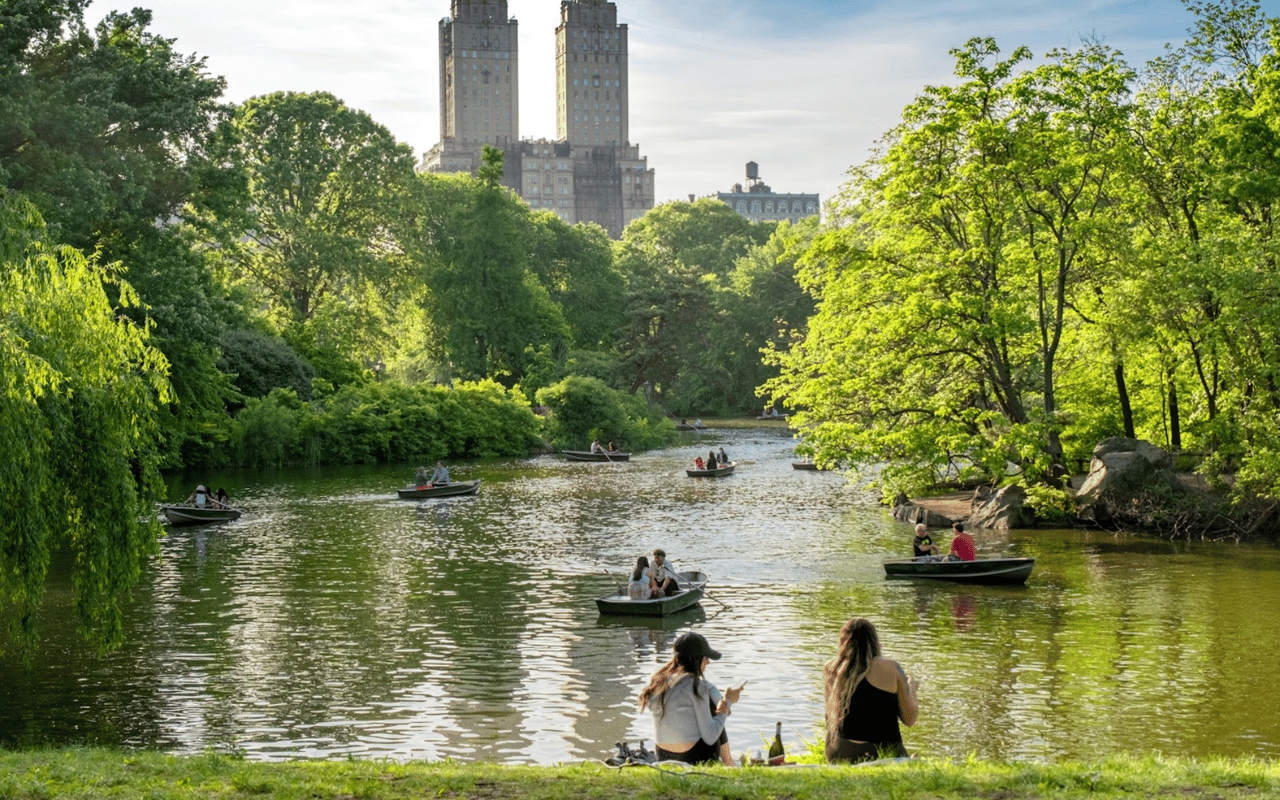
Central Park is the city's most democratic landmark. Designed by Frederick Law Olmsted and Calvert Vaux — the same duo behind Brooklyn's Prospect Park — its 843 acres stretch 2.5 miles long and half a mile wide, spanning from 59th Street to 110th Street. Construction began in 1858 and was completed in 1876, built around the intentional philosophy that green space should be accessible to all social classes equally. Olmsted and Vaux even sunk four transverse roads below park level so crosstown traffic would never interrupt the pastoral atmosphere — a design decision that feels remarkably modern 150 years later.
What most visitors miss is that the park has two completely different personalities depending on where you go. The southern half, near Sheep Meadow and Bethesda Terrace, belongs to tourists. The northern half belongs to New Yorkers. If you want to experience it like a local, head to:
The Loch & North Woods (101st to 110th St): Actual waterfalls, rugged winding paths, and a silence that makes you forget you're standing in the middle of Manhattan. It feels like the Adirondacks.
The Arthur Ross Pinetum (West Side at 85th St): A collection of pine trees from around the world that stays green all winter. Picnic tables without crowds.
Cop Cot (near Central Park South & 6th Ave): One of the oldest structures in the park — a massive rustic wooden gazebo on a hill with an elevated view of the Midtown skyline. Almost never busy.
The Whispering Bench (Shakespeare Garden, West Side at 79th St): A curved granite bench with an acoustic curiosity — whisper at one end and someone at the other end can hear you perfectly.
For live performances, SummerStage runs each year from May through September at Rumsey Playfield (69th St and 5th Ave), organized by the City Parks Foundation. The 2026 season includes confirmed shows from Yellowcard, Blues Traveler, Gin Blossoms, Marcus King Band, and more. Many performances are free. Follow @SummerStage on Instagram or visit CityParksFoundation.org for the full lineup, which typically drops in a single release each spring.
Beyond Central Park, two other green spaces deserve attention from anyone who lives here or plans to:
Prospect Park (Brooklyn): Olmsted and Vaux actually preferred this one to Central Park. At 526 acres, it's quieter, more local, and home to the LeFrak Center at Lakeside for skating year-round. Head to the Nethermead for open meadow space without the tourist density.
Fort Tryon Park (Inwood/Washington Heights): The highest natural point in Manhattan, with views of the Hudson River and the Palisades that feel more like a European estate than a New York park. It's also home to The Met Cloisters — a branch of the Metropolitan Museum built using actual transported medieval monasteries.
World-Class Museums (and How to Visit Them Affordably)
New York's museum landscape in 2026 is world-class, but admission prices have climbed. Here's what it actually costs and how residents pay less:
| Museum | Adult Admission | Pay-What-You-Wish |
|---|---|---|
| The Met | $30 | NY, NJ, CT residents with ID |
| MoMA | $30 | None (general public) |
| AMNH | $28 (base) | NY, NJ, CT residents with ID |
MoMA PS1 (Queens) has gone fully free for all visitors through the end of 2026 to celebrate its 50th anniversary — and its current "Greater New York 2026" exhibition (April 16 – August 17) fills the entire courtyard with large-scale outdoor installations from over 50 artists.
The Guggenheim offers pay-what-you-wish admission every Saturday from 6:00 PM to 8:00 PM.
New York Public Library cardholders can access the Culture Pass program, which provides free admission to dozens of museums. If you become a resident, the IDNYC card grants a free one-year membership to nearly every major cultural institution in the city.
Notable exhibitions currently drawing crowds (Spring 2026):
The Met's Costume Institute exhibit uses AI and sensory technology to let visitors experience historic garments too fragile to be worn. MoMA is currently running a major Joan Miró retrospective. The AMNH's new Hayden Planetarium Space Show, narrated by Pedro Pascal, focuses on the movements of our galaxy.
Three museums worth knowing beyond the Big Three:
The Frick Collection (1 East 70th St): After a multi-year renovation, the Frick has returned to its original Gilded Age mansion. Old Master paintings by Rembrandt and Vermeer are displayed in a residential setting rather than a sterile gallery. The indoor garden court is one of the most serene spaces in Manhattan.
Neue Galerie (86th & 5th Ave): Dedicated to early 20th-century German and Austrian art, including Klimt's "Woman in Gold." Go for the art, stay for Café Sabarsky — an authentic Viennese café inside the museum where the Sachertorte has a genuine following. First Fridays offer free admission from 5 PM to 8 PM.
The Tenement Museum (Lower East Side): Unlike any museum in the country, you cannot walk around freely here — you must book a guided tour of actual restored apartments housing the real stories of immigrant families who lived there between 1863 and 1935. The "Under One Roof" tour, focusing on post-WWII Chinese and Puerto Rican families, is the one locals recommend.
A Local's Neighborhood Guide
This is the heart of what separates New York from every other city — not its skyline, but its neighborhoods. Each one operates like its own small city with its own economy, culture, and identity.
Greenwich Village
Greenwich Village — "The Village" to everyone who lives there — is where the rigid Manhattan street grid breaks down into winding, European-style blocks lined with brownstones and ivy-covered facades. It's the only part of Manhattan that feels like a village.
In 2026, it functions as the city's premier culinary and educational corridor. NYU's presence gives it an intellectual energy around the clock, while the dining scene has produced some of the hardest reservations in New York — Carbone and 4 Charles Prime Rib among them. The jazz culture is still very much alive: the Village Vanguard on 7th Avenue South is considered the Carnegie Hall of jazz. Zinc Bar on West 3rd Street is the underground Art Deco alternative. Smalls hosts the best late-night jam sessions in the city, starting around 1:00 AM.
For walking, West 10th Street is arguably the most beautiful residential block in all of Manhattan — impeccably preserved brownstones, iron railings, and near-total quiet. MacDougal Street is for the classic Village hustle. Stuyvesant Street, one of the few diagonal streets that survived the 1811 grid plan, feels like stepping into the 18th century.
Real Estate (April 2026): Median home sale price sits at $1.6 million. Median monthly rent runs $5,700 – $5,800. Studios average $3,500 – $4,200. One-bedrooms run $5,000 – $6,500. Listing prices have risen 17.5% year-over-year, driven by demand for the neighborhood's rare "village-in-a-city" character.
SoHo
SoHo (South of Houston) has completed its transformation. The artist lofts of the 1970s are now among the most expensive addresses in the city — in large part because the Loft Law restricts available inventory, keeping supply tight and prices elevated.
The neighborhood's median age is roughly 39, with a resident profile that skews heavily toward high-net-worth creatives, fashion industry professionals, and international tech entrepreneurs. The architectural draw is the cast-iron building stock, which is irreplaceable, and streets like Greene Street and Wooster Street still have their original Belgian block cobblestones intact.
Shopping has evolved beyond luxury retail into experiential spaces. Buck Mason on Broadway has an integrated coffee concept called Fast Times built into its store. Khaite on Mercer Street operates more like a brutalist art installation than a traditional boutique, with subterranean floors and piped-in birdsong. For authentic curation, Blue in Green carries rare Japanese selvedge denim. IF, a SoHo institution since 1978, dressed Warhol and Basquiat and is still operating.
On the dining side, Raoul's remains the neighborhood's social anchor for steak au poivre. Balthazar is the late-night institution. For 2026 newcomers, Or'Esh is generating significant buzz for Mediterranean-Middle Eastern fusion.
Real Estate (April 2026): Median home sale price is $3.2 million, making it one of the most expensive neighborhoods per square foot in the city. Median monthly rent runs around $6,500. Luxury lofts with two or more bedrooms range from $13,500 to $25,000+ per month.
Lower East Side
The Lower East Side is New York's most visceral example of the city's constant reinvention. Once the most densely populated immigrant district in the world, it now operates with a split personality: gritty and working-class by day, one of the city's premier nightlife destinations by night.
The Essex Crossing development has physically transformed the neighborhood, bringing luxury towers, a cinema, and a high-end food hall to what were previously vacant lots. The grid between Houston and Delancey — known locally as "Hell Square" — is the epicenter of the bar scene after dark.
But the institutions that define the neighborhood's soul are still here. Katz's Delicatessen, founded in 1888, still uses the ticket system and still serves the best pastrami in the city. Russ & Daughters, which recently celebrated its 110th anniversary, remains the gold standard for smoked fish. The Tenement Museum on Orchard Street stands as one of the most unique cultural experiences in New York. Essex Market, the descendant of the old outdoor pushcart markets, now operates as a modern food hall with legacy vendors alongside new artisanal stalls.
Real Estate (April 2026): Median sale prices run $950,000 – $1.4 million, though this is skewed downward by HDFC co-ops with income restrictions. In newer luxury towers like One Manhattan Square, prices are significantly higher. Rental median runs $5,200 – $5,600, with studios at $3,600 – $4,200 and one-bedrooms at $4,500 – $6,100.
Upper West Side
The Upper West Side is where Manhattan residents go to put down roots. It's home to professors, musicians, writers, and young families — people who want brownstone-lined streets, pre-war apartment layouts with generous square footage, and access to both Central Park to the east and Riverside Park along the Hudson to the west.
Lincoln Center anchors the neighborhood's cultural life, hosting the Metropolitan Opera, the New York Philharmonic, and the New York City Ballet. The American Museum of Natural History is within walking distance for most residents. The neighborhood's "Summer for the City" program at Lincoln Center runs hundreds of free outdoor events annually, including silent discos and orchestral performances under the stars at Damrosch Park.
Transit is excellent: the 1, 2, 3 and A, B, C, D lines provide strong downtown and crosstown access. Riverside Park's lower tier runs directly along the Hudson and is ideal for cycling. The Boat Basin Café at 79th Street is the neighborhood's most beloved sunset spot.
Budget tip for buyers: If you want the UWS lifestyle without the price premium, look above 96th Street in Manhattan Valley, where pricing drops meaningfully while the neighborhood character largely holds.
Real Estate (April 2026): Median home sale price runs $1.3 – $1.4 million. Median rent is $5,000 – $5,100. Studios average $3,500 – $4,000. One-bedrooms run $4,800 – $5,300. Pre-war layouts with extra rooms are in particularly high demand from remote and hybrid workers.
Upper East Side
The Upper East Side has historically been the address of old-money Manhattan — white-glove doormen, limestone facades, Madison Avenue galleries and boutiques. That reputation still holds near Fifth Avenue and the park, but the eastern portions have evolved considerably, particularly since the Q train expansion brought Second Avenue subway access to the neighborhood.
The UES anchors Museum Mile — the Met, the Guggenheim, the Neue Galerie, and the Cooper Hewitt are all within walking distance of each other. It has the highest concentration of elite private schools in the country. The park access is excellent, particularly near the Reservoir.
For residents who want the prestige of the UES without the top-tier pricing, Yorkville (East 79th to 96th Street, east of First Avenue) has emerged as one of the more interesting value pockets in Manhattan, with a growing restaurant and bar scene following the Q train's arrival.
Real Estate (April 2026): Median home sale price is $1.2 – $1.3 million, though this is skewed by a high volume of small co-ops. Near Fifth Avenue, luxury inventory remains at record highs. Median monthly rent is $4,800. Studios average $3,300 – $3,700. One-bedrooms run $4,600 – $4,900.
Brooklyn: Williamsburg, DUMBO & Park Slope
Brooklyn is no longer Manhattan's more affordable alternative. In many pockets, it's now equally expensive — but residents move there for lifestyle reasons, not financial ones.
Williamsburg is loud, vibrant, and the most densely developed of the three. It functions as a younger, more industrial version of SoHo — high-rise luxury towers alongside independent boutiques, and one of the best waterfront parks in the city at Domino Park. Bedford Avenue is the main artery. New construction inventory here means it's easier to find a modern one-bedroom with building amenities than in the brownstone-heavy neighborhoods to the south.
DUMBO (Down Under the Manhattan Bridge Overpass) is compact, manicured, and offers arguably the best skyline photography in all of New York. The cobblestone streets, massive 19th-century warehouse conversions, and views from Brooklyn Bridge Park make it feel like a curated campus. It has the highest median sale price in the Brooklyn breakdown due to extremely limited inventory and several recent high-end penthouse sales.
Park Slope is the family neighborhood. Pristine brownstone rows, Prospect Park at its doorstep, and the Brooklyn Museum a short walk away. It's quieter and more community-oriented than Williamsburg, with block associations, community gardens, and a "local-first" retail culture. The rental market here, particularly for two-bedroom apartments, remains one of the more accessible high-end options for young families in Brooklyn.
Why people are leaving Manhattan for Brooklyn in 2026: It's not about price anymore — it's about space-to-sky ratio (higher ceilings, private outdoor space), stronger neighborhood community, and the reality that with hybrid work as the standard, proximity to Midtown offices five days a week no longer drives housing decisions.
Real Estate (April 2026):
| Neighborhood | Median Sale Price | Median Rent |
|---|---|---|
| DUMBO | $2.8 million | $6,200 – $7,000 |
| Williamsburg | $1.6 million | $5,200 – $5,800 |
| Park Slope | $1.7 million | $4,400 – $5,200 |
Skyline Views: Paid and Free
The paid observation decks have all stabilized their pricing in 2026, with sunset time slots typically carrying a $10 premium:
| Deck | Base Price | Best Reason to Choose It |
|---|---|---|
| Empire State Building | $44 | Historical nostalgia; views of Lower Manhattan |
| Top of the Rock | $40 – $43 | Best view of the Empire State Building; unobstructed Central Park views |
| The Edge | $40 (advance) | Glass floor, 1,100 feet up — the most physically thrilling |
| One World Observatory | $48 | Highest point in the city; best harbor and Statue of Liberty views |
At The Edge, booking 14+ days in advance drops the price to $34. Top of the Rock offers "The Beam" add-on for $15 – $25, where you recreate the famous 1932 photo of ironworkers eating lunch on a steel girder — now an art and photo experience 69 stories up.
Free viewpoints locals actually use:
The NYC Ferry — for the price of a subway ride ($2.90), the East River or Astoria routes offer front-row skyline access. The Williamsburg Bridge pedestrian path, painted bright pink, delivers unobstructed views of both the Empire State Building and the Chrysler Building without the selfie-stick crowds of the Brooklyn Bridge. Brooklyn Bridge Park at blue hour (roughly 20 minutes after sunset) is when the Manhattan skyline lights up against the last light in the sky.
New for summer 2026: the city has opened the rooftop of the David N. Dinkins Municipal Building in Lower Manhattan for free guided tours, offering a 360-degree view of City Hall, the Brooklyn Bridge, and the World Trade Center from 36 stories up.
Timing tip: Always check the visibility report posted in the lobby of observation decks before purchasing. On foggy days, you're paying $40 to stand inside a cloud.
Broadway & Live Performance
Broadway average paid admission currently runs $126 – $142. Budget seats in the rear mezzanine start around $60 – $80. For major productions like Hamilton or The Lion King, expect $150 – $350 or more. Off-Broadway shows — which often deliver more experimental and intimate experiences — typically run $40 – $90.
For discounts, the TKTS booths operated by the Theatre Development Fund offer same-day tickets at 20% to 50% off. The Times Square location (Broadway at 47th Street, the "Red Steps") is the most well-known but also the most crowded. Evening windows are Monday through Saturday 3:00 – 8:00 PM and Sunday 3:00 – 7:00 PM. Matinee windows run Wednesday, Thursday, and Saturday 11:00 AM – 2:00 PM and Sunday 11:00 AM – 3:00 PM.
The Lincoln Center TKTS location (61 West 62nd St, inside the David Rubenstein Atrium) is significantly less crowded and operates Tuesday through Saturday 11:00 AM – 6:00 PM. It also allows next-day matinee purchases. Most shows now also offer digital rush lotteries through the TodayTix app, opening at midnight the day before performances.
Free performances for 2026:
Shakespeare in the Park at the Delacorte Theater in Central Park runs Romeo & Juliet (May 22 – June 28) and The Winter's Tale (July 25 – August 23). Tickets are free. For in-person tickets, arrive at the Delacorte by noon on performance days — locals often line up by 6:00 AM. The TodayTix app also runs a daily digital lottery.
Lincoln Center's "Summer for the City" program offers hundreds of free outdoor events, including outdoor silent discos and full orchestral performances under the stars at Damrosch Park. Bryant Park Picnic Performances — opera, jazz, contemporary dance — require no tickets at all. The Met Opera Summer HD Festival brings free outdoor screenings to Lincoln Center Plaza from August 22 through September 1, 2026.
Food & Culinary Scene
New York's 2026 Michelin landscape has shifted in notable ways. Jungsik in Tribeca recently received its third star, making it the first Korean restaurant in the United States to reach that level. Eleven Madison Park remains a three-star institution in the Flatiron District, still plant-based, still housed in one of the most beautiful Art Deco dining rooms in the city. Nōksu, a 15-seat tasting menu restaurant located inside the 34th Street-Herald Square subway station, holds one star and charges a fraction of comparable experiences.
Eating by neighborhood, the way locals do:
The Upper West Side's Barney Greengrass has been serving smoked fish platters and sturgeon with scrambled eggs since 1908 — it remains the definitive neighborhood breakfast institution. The Upper East Side's JG Melon serves a simple, cash-only pub burger that has outlasted every food trend in the city for decades. In Harlem, Charles Pan-Fried Chicken — where Charles Gabriel still cooks in oversized skillets — is a legitimate institution. For Greek food, Astoria in Queens is non-negotiable; Elias Corner's grilled octopus off a charcoal grill is what the neighborhood does best.
Food markets beyond Chelsea Market:
The Queens Night Market at Flushing Meadows runs Saturdays from mid-April through October. Everything is capped at $5 – $8, and the range spans from Sierra Leonean stews to Cambodian fish amok — it's the most culturally diverse food event in the country. Mercado Little Spain at Hudson Yards, created by José Andrés, is the place for authentic jamón ibérico and churros. Essex Market on the Lower East Side blends legacy butchers and new-school vendors including Shopsin's, famous for its 900-item menu.
Ethnic enclaves, specifically:
In Koreatown on West 32nd Street, Jongro BBQ is known for its vintage 1980s Seoul atmosphere and beef platters. In Chinatown, Nom Wah Tea Parlor — operating since the 1920s — is the pick for dim sum and the city's best soup dumplings. On Mulberry Street in Little Italy, Ferrara Bakery has been serving cannoli since 1892. For a more authentic Italian experience, locals generally point visitors toward Arthur Avenue in the Bronx.
The High Line & NYC's Waterfront Parks
The High Line runs 1.45 miles from Gansevoort Street in the Meatpacking District to West 34th Street, open daily 7:00 AM – 10:00 PM. It's as much an art installation as a park. Current 2026 exhibitions include monumental bronze sculptures of melting everyday objects by Woody De Othello and whimsical porcelain-style work by Genesis Belanger along the northern end.
Pro tip: Start at 34th Street and walk south. It's slightly downhill and drops you into the Meatpacking District, which is a significantly better place to find a post-walk drink or meal than the northern end near Hudson Yards.
Brooklyn Bridge Park spans 85 acres and 1.3 miles of the Brooklyn waterfront across six distinct piers. Pier 1 has the sweeping harbor views. Pier 2 has basketball courts and a roller rink. Pier 4 has a sandy beach where you can launch non-motorized boats. Pier 5 has turf fields and the city's largest BBQ area. Pier 6 has the destination playground for families.
Hudson River Park stretches 4.5 miles along Manhattan's West Side. The recently opened Gansevoort Peninsula features Manhattan's first public beach. Little Island at Pier 55 — a floating park on 132 tulip-shaped concrete pots — hosts free performances in its amphitheater throughout the summer. Pier 26's Tide Deck offers an ecologically focused walkway where you can observe the Hudson's tidal movement up close.
Free kayaking is available at two locations starting late May. In Manhattan, the Downtown Boathouse at Pier 26 (Tribeca) and Pier 96 (57th St) offers free 20-minute walk-up sessions on weekends from 10:00 AM – 4:30 PM and weeknights Tuesday and Thursday from 5:30 – 7:30 PM, starting May 23. In Brooklyn, the Brooklyn Bridge Park Boathouse between Pier 1 and Pier 2 opens May 27 with sessions on Wednesdays and Thursdays 5:00 – 7:00 PM and Saturdays 10:00 AM – 3:00 PM. Reservations are strongly recommended for the Brooklyn location and open two weeks in advance.
The Art Scene
New York's gallery ecosystem in 2026 is no longer centered in a single neighborhood.
Chelsea remains the institutional hub for museum-quality shows. Hauser & Wirth on 22nd Street and Lisson Gallery on 24th Street anchor the commercial end of the market. Tribeca has arguably surpassed Chelsea in "cool factor," with over 80 galleries in historic cast-iron buildings — more walkable, less sterile. The Lower East Side is where to go for emerging talent; galleries like James Fuentes and Perrotin run smaller, edgier, more experimental programming.
The Bushwick Collective is not a gallery — it's a living, evolving outdoor gallery across an entire industrial district in Brooklyn. Take the L train to Jefferson Street and you're in the middle of it immediately. It's open 24/7 and free. The best time to visit is 10:00 AM – 4:00 PM for lighting and activity. Troutman Street holds the largest and most famous murals. Wyckoff Avenue is where the street art meets the neighborhood's best bars and cafes. The annual Bushwick Collective Block Party — with live painting, food trucks, and music — is scheduled for May 30, 2026.
Notable public art currently up (Spring 2026): The High Line's Plinth at 30th Street features "Old Tree" by Pamela Rosenkranz, a 25-foot neon-pink-and-red sculpture that mimics the human nervous system. MoMA PS1's "Greater New York 2026" (April 16 – August 17) fills the entire courtyard with outdoor installations from over 50 artists and is currently the most talked-about exhibition in the city.
Most galleries are closed Sundays and Mondays. Saturday afternoon is the best time for a gallery crawl.
Frequently Asked Questions
What is the best neighborhood in NYC to live in? There's no single answer, but the top-trending areas in 2026 for different profiles are: the Financial District for its fast-growing residential conversion and relatively accessible pricing, Windsor Terrace in Brooklyn as a quieter and more affordable alternative to Park Slope, Carroll Gardens for its food scene and community character, and Long Island City in Queens for luxury new construction with fast Manhattan subway access.
What are the best free things to do in New York City? MoMA PS1 is free for all visitors through the end of 2026. The American Folk Art Museum and the National Museum of the American Indian are free year-round. The High Line, Central Park, and the Staten Island Ferry (which offers unobstructed views of the Statue of Liberty and Lower Manhattan) cost nothing. Shakespeare in the Park runs free all summer via the TodayTix lottery. Bryant Park Picnic Performances need no tickets.
What is the best time of year to move to NYC? January and February typically see the lowest rents and the most landlord incentives — concessions like a free month of rent are common in winter. May and September have the most available inventory but also the highest competition and prices.
How do locals get around New York City? The MTA subway runs 24/7 and is the primary mode of transportation. The NYC Ferry system now serves over 50 million annual riders and is a favorite commuter option from Brooklyn, Queens, and the Bronx. Citi Bike e-bikes have expanded dramatically for last-mile trips. Most residents walk 2 – 5 miles daily as a standard part of their routine — NYC consistently ranks as the most walkable city in the country.
What makes NYC different from every other major U.S. city? Over 800 languages are spoken here — more than in any other city on earth. Most residents don't own cars. The subway runs all night. Wall Street, Broadway, and the United Nations are all here simultaneously. And despite 65 million annual visitors, the neighborhoods where locals actually live retain cultures, food traditions, and community structures that outsiders rarely encounter. That gap between what tourists see and what residents know is what this guide exists to close.
Find Your Home in New York City with Keller Williams NYC
For those considering a move to New York City, Keller Williams NYC is a full-service luxury brokerage with deep expertise across all five boroughs. With over 600 local agents and a consistent ranking among the city's top ten brokerages, the KW NYC team brings genuine neighborhood knowledge to every search — whether you're drawn to a pre-war co-op on the Upper West Side, a brownstone in Park Slope, or a DUMBO loft with views of the bridge.
Keller Williams NYC covers residential sales and leasing, new development, commercial, and relocation services. If you're ready to make New York home, connect with the team at KWNYC.com.