New York City’s public parks range from expansive green spaces with iconic landmarks to compact community spots that serve local neighborhoods. While many visitors and residents know Central Park by name, the city includes hundreds of parks that reflect the identity of each borough. With landscapes ranging from waterfront paths to woodlands and manicured lawns to restored wetlands, the parks across New York are as diverse as the communities they serve.
This guide highlights a mix of well-known and under-the-radar New York NY parks, each with specific features and layouts that define their use and appeal.
Central Park (Manhattan)
Central Park covers more than 840 acres in the center of Manhattan and is the most visited park in the city. The park includes open lawns, wooded areas, athletic fields, lakes, and paths that extend across its entire length. Bethesda Terrace, Sheep Meadow, the Great Lawn, and the Ramble each offer different types of landscapes for relaxing, and structured recreation.
The park supports dozens of daily activities, from morning runs along the Reservoir Loop to afternoon picnics in shaded lawns. Central Park Conservancy oversees maintenance and restoration, ensuring that historic features such as the Bow Bridge and the Alice in Wonderland statue remain preserved. Entry points at 59th Street, 72nd Street, and 86th Street each lead to different sections of the park and connect directly to subway lines and bus stops.
The park supports dozens of daily activities, from morning runs along the Reservoir Loop to afternoon picnics in shaded lawns. Central Park Conservancy oversees maintenance and restoration, ensuring that historic features such as the Bow Bridge and the Alice in Wonderland statue remain preserved. Entry points at 59th Street, 72nd Street, and 86th Street each lead to different sections of the park and connect directly to subway lines and bus stops.
Prospect Park (Brooklyn)
Prospect Park spans over 500 acres and serves as the main park space in central Brooklyn. Designed by Frederick Law Olmsted and Calvert Vaux after their work on Central Park, Prospect Park includes the Long Meadow, Nethermead, and Prospect Park Lake. The park also features forested paths, a bandshell for live performances, and a loop road used by joggers and cyclists.
The park is home to the Prospect Park Zoo and the LeFrak Center at Lakeside, where visitors can rent pedal boats or ice skate seasonally. The Ravine area in the park’s midsection preserves native woodland and includes paths shaded by canopy trees. Entrances along Grand Army Plaza and Parkside Avenue provide easy access to different areas of the park, making it a year-round destination for Brooklyn residents.
The park is home to the Prospect Park Zoo and the LeFrak Center at Lakeside, where visitors can rent pedal boats or ice skate seasonally. The Ravine area in the park’s midsection preserves native woodland and includes paths shaded by canopy trees. Entrances along Grand Army Plaza and Parkside Avenue provide easy access to different areas of the park, making it a year-round destination for Brooklyn residents.
Flushing Meadows–Corona Park (Queens)
Flushing Meadows–Corona Park is the largest park in Queens and includes more than 900 acres of open space and event venues. The park became the site of the 1939 and 1964 World’s Fairs, and many of its structures remain in place today. These include the Unisphere, Queens Museum, New York Hall of Science, and the Queens Botanical Garden.
Visitors use the park for sports, outdoor festivals, and seasonal programming. The wide paved paths connect baseball fields, soccer areas, and picnic grounds. Meadow Lake and Willow Lake each offer waterfront views and trails. The park is accessible by subway at the Mets–Willets Point station and is adjacent to the USTA Billie Jean King National Tennis Center and Citi Field.
Visitors use the park for sports, outdoor festivals, and seasonal programming. The wide paved paths connect baseball fields, soccer areas, and picnic grounds. Meadow Lake and Willow Lake each offer waterfront views and trails. The park is accessible by subway at the Mets–Willets Point station and is adjacent to the USTA Billie Jean King National Tennis Center and Citi Field.
Inwood Hill Park (Manhattan)
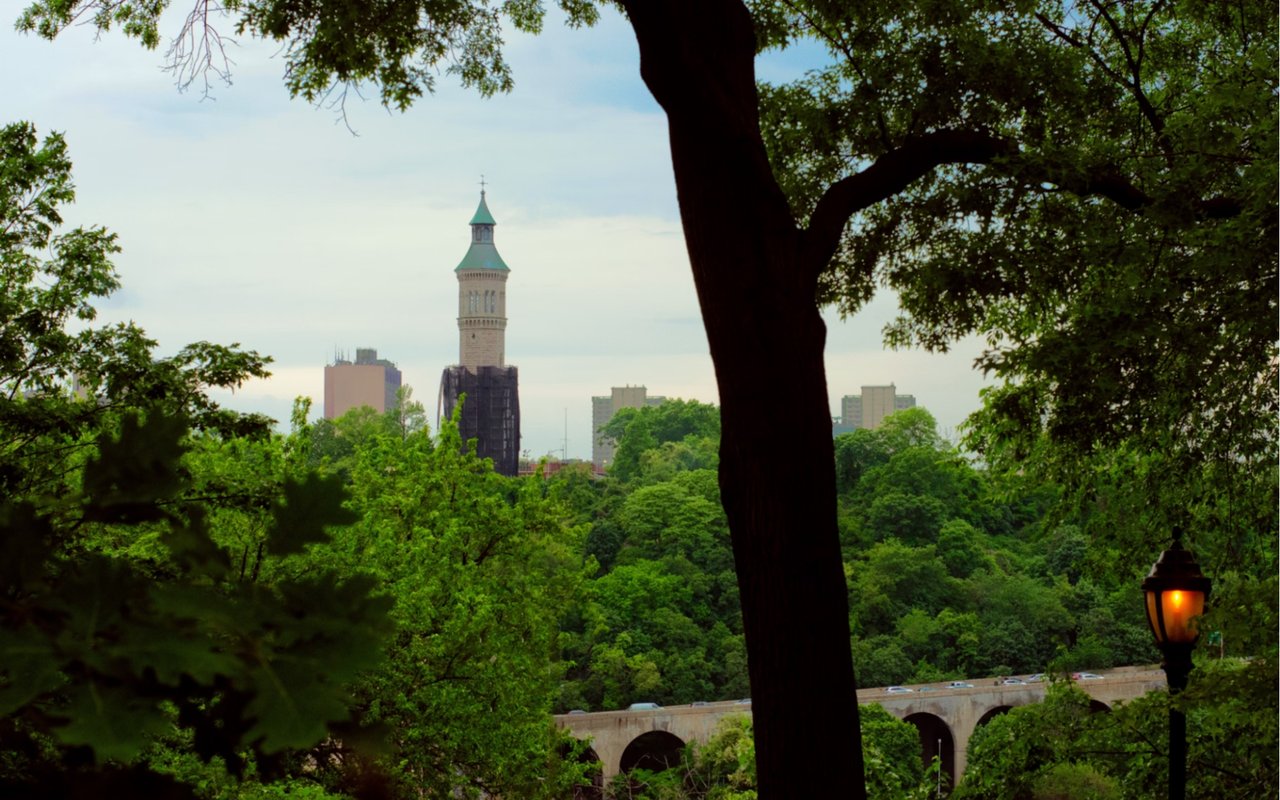
Inwood Hill Park is located at the northern tip of Manhattan and includes steep wooded slopes, glacial rock formations, and riverfront paths along the Hudson. It is the only park in Manhattan that contains natural forest, with hiking trails that climb to views of the Palisades and Spuyten Duyvil Creek. The park also preserves archaeological sites tied to the Indigenous Lenape community.
Athletic fields, tennis courts, and a nature center are located closer to the park's west side, while the eastern side features open lawns and waterfront access. Kayaking and birdwatching are popular in the park’s lower areas, particularly near the boathouse and cove. Secluded trails and older trees give the park a natural, less-urban feel compared to other large New York NY parks.
Athletic fields, tennis courts, and a nature center are located closer to the park's west side, while the eastern side features open lawns and waterfront access. Kayaking and birdwatching are popular in the park’s lower areas, particularly near the boathouse and cove. Secluded trails and older trees give the park a natural, less-urban feel compared to other large New York NY parks.
Fort Tryon Park (Manhattan)
Fort Tryon Park borders the Hudson River in Upper Manhattan and is best known as the home of the Met Cloisters. The park includes terraced gardens, historic stonework, and pathways that wind through landscaped gardens and overlook points. Heather Garden, located near the Margaret Corbin Circle entrance, contains one of the city’s most diverse collections of plants.
The park’s design supports quiet paths and panoramic views of the river and New Jersey cliffs. Upper terraces connect to more expansive lawns and forested sections below. The park’s layout features elevation changes and pathways built into the natural terrain. Residents use the park for quiet seating and cultural outings at the museum, which showcases medieval architecture and art.
The park’s design supports quiet paths and panoramic views of the river and New Jersey cliffs. Upper terraces connect to more expansive lawns and forested sections below. The park’s layout features elevation changes and pathways built into the natural terrain. Residents use the park for quiet seating and cultural outings at the museum, which showcases medieval architecture and art.
Pelham Bay Park (The Bronx)
Pelham Bay Park is New York City’s largest park by acreage, covering over 2,700 acres in the northeast Bronx. The park includes upland forest, tidal wetlands, sports fields, and Orchard Beach, which offers seasonal swimming and beach access. Trails in the park’s Hunter Island and Twin Islands areas provide opportunities for longer hikes and nature observation.
The park is divided into sections that support different uses. Barbecuing and field sports are common near Middletown Road, while bridle paths and natural trails wind through the wooded areas in the northern portion. Pelham Bay Park also includes the Bartow-Pell Mansion Museum and historic cemetery sites. Its extensive layout and regional scale give it a different experience from smaller urban parks.
The park is divided into sections that support different uses. Barbecuing and field sports are common near Middletown Road, while bridle paths and natural trails wind through the wooded areas in the northern portion. Pelham Bay Park also includes the Bartow-Pell Mansion Museum and historic cemetery sites. Its extensive layout and regional scale give it a different experience from smaller urban parks.
Socrates Sculpture Park (Queens)
Socrates Sculpture Park is an outdoor museum and public park located on the East River in Long Island City. It includes rotating sculpture exhibits, performance areas, and a sloped lawn overlooking Roosevelt Island and Manhattan. Located on a former landfill, the park emphasizes public access to art and waterfront views.
Programs at the park include outdoor yoga, film screenings, and artist talks. The open format of the grounds allows for a mix of art installations and passive use. The park connects with Vernon Boulevard Greenway and other waterfront spaces in Queens. Entry is free and accessible by nearby subway lines and local buses.
Programs at the park include outdoor yoga, film screenings, and artist talks. The open format of the grounds allows for a mix of art installations and passive use. The park connects with Vernon Boulevard Greenway and other waterfront spaces in Queens. Entry is free and accessible by nearby subway lines and local buses.
Washington Square Park (Manhattan)
Washington Square Park is in Greenwich Village and serves as a community gathering space, performance area, and casual meeting point. The park’s central feature is the Washington Arch, which frames the southern end of Fifth Avenue. The open plaza around the fountain supports informal performances, casual seating, and public activity throughout the day.
The park's outer sections are filled with chess tables, a playground, dog runs, and paths. The square attracts a steady mix of students, performers, and nearby workers. Its flat terrain and compact layout keep the park accessible without making it feel disconnected from the surrounding neighborhood. Washington Square Park plays a key role in the daily rhythm of Lower Manhattan.
The park's outer sections are filled with chess tables, a playground, dog runs, and paths. The square attracts a steady mix of students, performers, and nearby workers. Its flat terrain and compact layout keep the park accessible without making it feel disconnected from the surrounding neighborhood. Washington Square Park plays a key role in the daily rhythm of Lower Manhattan.
Honorable Mentions
In addition to the parks described above, many other New York City parks offer unique features, specialized amenities, and local value. While they weren’t detailed in this guide, these parks contribute to the city's extensive network of public green space and are worth visiting:
- Riverside Park (Manhattan) – A long, narrow park running along the Hudson River with paths, sports courts, and community gardens.
- Bryant Park (Manhattan) – A compact midtown park known for its seasonal programming, outdoor seating, and central lawn behind the New York Public Library.
- The High Line (Manhattan) – An elevated linear park built on a former rail line, featuring landscaped paths, public art, and views of Chelsea and the West Side.
- Madison Square Park (Manhattan) – A landscaped park near the Flatiron Building with rotating art installations and a popular food pavilion.
- Battery Park (Manhattan) – Located at the southern tip of Manhattan, with harbor views, memorials, and access to ferries.
- Domino Park (Brooklyn) – A modern waterfront park in Williamsburg with industrial-themed design elements and riverfront access.
- McCarren Park (Brooklyn) – A multi-use park on the border of Williamsburg and Greenpoint, offering athletic fields, a track, and a seasonal pool.
- Astoria Park (Queens) – Situated along the East River with views of the Triborough and Hell Gate Bridges, a running track, and one of NYC’s largest public pools.
- Van Cortlandt Park (The Bronx) – Features woodlands, sports fields, and the city’s oldest public golf course.
- Greenbelt (Staten Island) – A large network of wooded parks and trails, including High Rock Park and Willowbrook Park, offering more rural outdoor experiences.
Start Your Journey to NYC Real Estate Here
If you plan to buy or sell property in New York City, working with Keller Williams NYC gives you direct access to one of the most trusted and widely respected names in real estate. With nearly 200,000 agents globally and a reputation built on innovation, education, and service, Keller Williams leads the industry in market reach and performance. Their presence in New York City combines deep local expertise with the resources of a global powerhouse, giving you the tools, insights, and representation needed to succeed in today’s market.
Reach out to Keller Williams NYC for insightful guidance as you explore your real estate options in New York City.
Reach out to Keller Williams NYC for insightful guidance as you explore your real estate options in New York City.