28,649 people live in Greenwich Village, where the median age is 39 and the average individual income is $147,040. Data provided by the U.S. Census Bureau.
Total Population
Median Age
Population Density Population Density This is the number of people per square mile in a neighborhood.
Average individual Income
Few Manhattan neighborhoods carry the mythology that Greenwich Village does. Locals simply call it "the Village," and for good reason—it has always been its own world within the city, defined by crooked streets, low-rise brownstones, and a cultural pedigree that runs from Walt Whitman to Bob Dylan to the Stonewall Uprising.
For anyone considering a move to downtown Manhattan, the Village occupies a unique position. It offers the walkable, human-scale intimacy of a historic European district while sitting on top of one of the most connected transit hubs in North America. This guide is designed to give prospective buyers and renters an honest, ground-level look at what living in Greenwich Village actually involves—the architecture, the market, the sub-neighborhoods, and the trade-offs that come with buying into one of the most preservation-protected zip codes in the country.
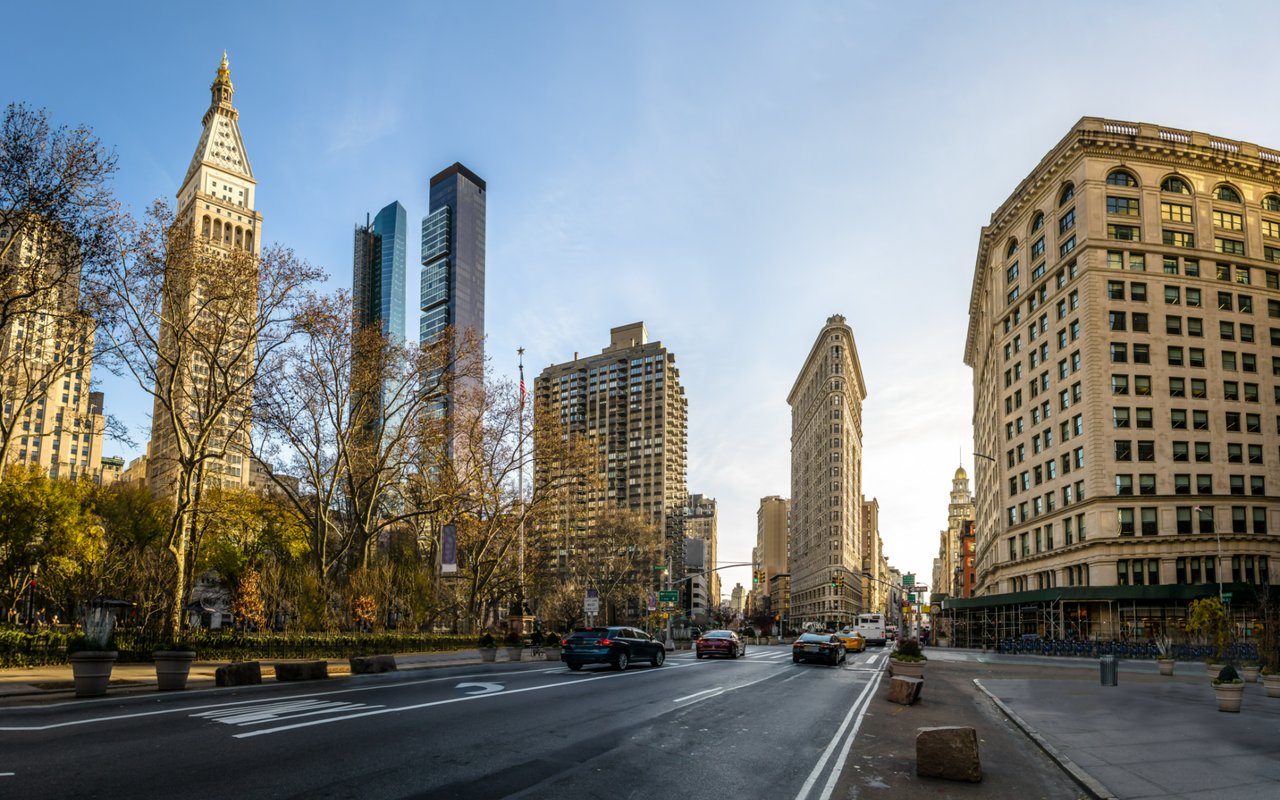
Greenwich Village sits in the heart of downtown Manhattan, bound by 14th Street to the north, Houston Street to the south, Broadway to the east, and the Hudson River to the west. Within those borders lives a neighborhood that intentionally refuses to conform to the rest of Manhattan.
The streets don't follow the city grid. West 4th Street crosses West 10th and West 12th. Brownstones sit next to century-old jazz clubs. And Washington Square Park, with its marble arch and central fountain, functions as the neighborhood's cultural living room, drawing musicians, students, chess hustlers, and families onto the same benches every afternoon.
The Village is highly walkable, deeply residential in its interior blocks, and heavily influenced by New York University, whose academic buildings are woven directly into the streetscape around Washington Square. Expect tree-lined streets, sidewalk cafés, independent bookstores, historic taverns, and some of the most protected architecture in Manhattan.
The Village's peculiar character comes directly from its history. Long before it was fashionable, it was farmland. The Lenape called the area Sapokanikan, and Dutch settlers cleared the marshy land for pasture in the 1630s. The British later took over and renamed it Greenwich.
The neighborhood's modern shape traces back to a public health disaster. In 1822, a yellow fever epidemic swept lower Manhattan, and wealthy families fled north to the countryside air of Greenwich Village. What began as a temporary escape became permanent settlement, which is why the neighborhood was already fully developed by the time Manhattan adopted its strict 1811 grid plan. The Village kept its tangled colonial streets, and to this day, that quirk defines its physical charm.
By the early twentieth century, low rents drew artists, writers, and radicals. Walt Whitman and Mark Twain had already lived in the neighborhood, and the Beat Generation—Jack Kerouac, Allen Ginsberg, and their circle—made it their home in the 1950s. The 1960s brought the folk music revival: a young Bob Dylan played his first New York gig at Café Wha? on MacDougal Street in January 1961, and clubs like The Bitter End hosted Joni Mitchell, Simon & Garfunkel, and Jimi Hendrix.
Then, in June 1969, a police raid at the Stonewall Inn on Christopher Street sparked the demonstrations that launched the modern LGBTQ+ rights movement. That moment—more than any building, park, or restaurant—is why the Village occupies the cultural place it does in American history.
Locals rarely refer to "the Village" as a single zone. It breaks down into three distinct pockets, each with its own scale, energy, and price point.
The West Village sits west of 7th Avenue and stretches to the Hudson. It is the quietest, most exclusively residential, and most expensive part of the neighborhood. Winding streets like Commerce, Bedford, and Bank feel almost entirely cut off from the noise of the rest of the city. The Far West Village—the thin waterfront strip—was once an industrial shipping corridor and has since become home to luxury loft conversions and a small number of sleek modern condominium towers.
Central Village, the core surrounding Washington Square Park, runs roughly between 7th Avenue and University Place. This is where the neighborhood's energy concentrates. NYU's presence keeps the streets active from morning to late night, and Bleecker and MacDougal Streets form the spine of the Village's nightlife, restaurants, and comedy scene.
NoHo and the East Edge, running from University Place to Broadway, is a transitional zone. The scale grows larger here, with cast-iron loft buildings and wider commercial corridors that echo the industrial architecture of neighboring SoHo. It reads less "cozy townhouse" and more "grand downtown loft."
Walking through Greenwich Village is closer to walking through a museum than through most Manhattan neighborhoods. In 1969, a massive portion of the neighborhood was designated the Greenwich Village Historic District, which means building facades cannot be altered and new high-rises are effectively forbidden on protected blocks. That preservation shield is the single most important thing to understand about the local housing stock.
Four architectural eras dominate:
Architectural Style | Era | Key Traits |
|---|---|---|
Federal Style | 1780s–1830s | Low-rise (2–3 stories), red brick facades, pitched roofs with dormers, modest entryways. The Village holds one of the largest surviving collections in the country. |
Greek Revival | 1830s–1850s | Grand entryways designed like miniature Greek temples, columns, heavy stone cornices, and iconic stoops with cast-iron railings. The Washington Square North row is the definitive example. |
Italianate Brownstones | 1850s–1880s | Tall, deep-red or brown sandstone facades with ornate bracketed window hoods and grand stoops. Perry, Bank, and Charles Streets showcase these. |
Pre-War Tenements & Co-ops | 1880s–1940s | Five- and six-story brick walk-ups with the decorative fire escapes that define the Village skyline. Originally working-class housing, most have been renovated into desirable co-ops. |
The most photographed apartment in the neighborhood is probably 90 Bedford Street at the corner of Grove Street—the exterior used for the sitcom Friends. It's a classic late-nineteenth-century brick tenement with ground-floor retail, and it captures exactly what defines Village architecture: five stories, iron fire escapes, and roots that go back over a century.
The Village is one of the most stable, expensive, and inventory-starved real estate markets in Manhattan. Preservation laws mean almost no new supply, and demand from buyers who want a piece of historic New York never really cools. That combination has kept prices high and appreciation steady even through broader market corrections.
Median sale prices sit comfortably in the $1.5M to $1.8M range, with premium properties—especially single-family townhouses—commanding $10M to $20M and above. Expect price-per-square-foot figures in the $1,600 to $1,800 range on typical apartments, higher for renovated townhouses.
The rental market is equally competitive. A one-bedroom in the Village routinely rents for $4,500 to $5,800 per month, driven by a mix of young professionals, NYU-adjacent families, and international residents who want a downtown address without committing to a purchase.
One of the most important market realities in the Village is the dominance of co-ops over condos. Most apartments available for purchase are co-ops, which means buyers go through a board approval process, typically need down payments in the 20% to 25% range or higher, and must demonstrate significant post-closing liquidity. This is one of the biggest reasons working with a local agent matters here—co-op board packages are their own discipline.
In a neighborhood this densely built, green space becomes something residents rely on daily rather than occasionally.
Washington Square Park is the anchor. Just under ten acres, it sits directly beneath NYU's shadow and functions as the neighborhood's public living room. On any given afternoon the central fountain is ringed by jazz musicians, students on the grass, activists with signs, tourists with cameras, and skateboarders threading through the crowd. The park's southwest corner holds the famous outdoor chess tables, where street hustlers and grandmasters play speed chess for money. In the northwest corner stands the Hangman's Elm, an English elm estimated to be over 300 years old—likely the oldest tree in Manhattan.
Jefferson Market Garden, tucked beside the Jefferson Market Library, is a smaller, gated sanctuary maintained by neighborhood volunteers. It's a rare quiet spot—no radios, no dogs—and a favorite for residents who want a break from Washington Square's constant energy.
Hudson River Park runs along the entire western edge of the Village. It offers long green lawns, a protected two-way bike lane, and piers stretching out into the river. For runners, cyclists, and residents who value sunset views, this is the neighborhood's premier outdoor asset.
And then there are the hidden pockets. Grove Court, built in the 1850s, is a tiny gated mews tucked behind Grove Street, containing a cluster of brick townhouses invisible from the sidewalk. These private enclaves are part of what makes the Village feel like it still holds secrets.
The Village has arguably the deepest and most competitive restaurant scene in Manhattan. It blends century-old institutions with some of the hardest reservations in the city.
The Italian legacy runs deep. Via Carota, from chef-owners Jody Williams and Rita Sodi, has become one of the defining West Village restaurants of the last decade—no reservations, always a wait, and worth it. Don Angie is known for its rolled pinwheel lasagna and modern Italian-American cooking. Carbone, with its retro red-sauce theatricality, remains one of the toughest reservations in New York.
For heavier hitters, Minetta Tavern has been serving French-American classics since 1937, and its Black Label Burger is widely considered one of the finest in the city. 4 Charles Prime Rib is a wood-paneled, dimly lit subterranean spot known for its prime rib and a burger that's essentially only available if you know when to ask.
The quick-bite tradition is equally strong. Bleecker and MacDougal give you Joe's Pizza (the quintessential New York slice) and gourmet counterpoint L'Industrie Pizzeria. Magnolia Bakery on Bleecker still draws a line for its banana pudding, more than two decades after Sex and the City first made it famous.
The Village's identity as a nightlife destination is inseparable from its cultural history. The Beat writers, folk revival, jazz greats, comedy legends, and Stonewall era all left their infrastructure behind, and much of it is still operating.
For jazz, the Village remains sacred ground. The Village Vanguard, opened in 1935, is the oldest continuously operating jazz club in New York City. Miles Davis, John Coltrane, and Bill Evans recorded legendary live albums on its triangular stage. Arthur's Tavern has hosted live music since 1937 and famously charges no cover. Smalls is the late-night purist's choice—a basement room where jam sessions run into the early morning.
For historic drinking, White Horse Tavern, established in 1880, is one of the oldest bars in the city and the favored haunt of Dylan Thomas and Jack Kerouac in their time. Employees Only, hidden behind a neon psychic sign on Hudson Street, helped launch the modern craft cocktail movement. Marie's Crisis Café is exactly what it sounds like—a piano bar where nightly crowds sing show tunes at the top of their lungs, and one of the last of its kind in New York.
For comedy, The Comedy Cellar on MacDougal is the recognized epicenter of American stand-up. Its brick-wall backdrop shows up in every stand-up special ever filmed there, and A-list comics drop in unannounced regularly.
Café Wha? still operates on MacDougal Street—the same stage where Bob Dylan played his first New York show in 1961. That kind of continuity is the Village's superpower.
While Broadway and 14th Street have inevitably attracted global brands, the interior streets of the Village remain a stronghold for independent retail—one of the few pockets left in Manhattan where boutique culture still thrives.
For readers, Three Lives & Co. on West 10th Street is a beloved neighborhood bookstore known for personalized staff recommendations and a cozy, living-room atmosphere. Just outside the neighborhood's edge, The Strand offers its famous "18 miles of books."
For food, Bleecker Street preserves the Village's Italian heritage. Murray's Cheese, operating since 1940, remains one of the best specialty cheese shops in the country. Faicco's Italian Specialties has been slicing salumi and making fresh mozzarella on the same block since 1900—a genuine four-generation neighborhood institution.
For fashion and lifestyle, the West Village's stretches of Bleecker and Hudson host high-end fragrance houses, vintage boutiques, and independent designers tucked into the ground floors of historic brownstones. It's quieter and more curated than SoHo but no less serious in what it stocks.
Few New York neighborhoods carry as much cultural weight per square foot as the Village.
The Stonewall Inn at 53 Christopher Street is the most historically significant landmark. In 2016, it and its surrounding streets were designated the Stonewall National Monument, the first U.S. National Park Service unit dedicated to LGBTQ+ history. Directly across the street in Christopher Park stands the Gay Liberation Monument, four bronze figures by artist George Segal commemorating the 1969 uprising.
Jefferson Market Library is one of the most architecturally striking buildings in downtown Manhattan. Its High Victorian Gothic clock tower once served as a fire lookout for the nineteenth-century courthouse it originally housed. Community activists saved it from demolition and converted it into a public library.
The Cherry Lane Theatre, tucked away on Commerce Street, is the oldest continuously running Off-Broadway theater in New York City. Founded in 1924 in a converted farm silo, it hosted early work by Samuel Beckett, F. Scott Fitzgerald, and Sam Shepard.
Washington Mews, a gated cobblestone alley just north of Washington Square Park, was originally built as stables for the wealthy families of Washington Square North. Today it houses NYU faculty residences and academic spaces.
One of the neighborhood's quirkiest landmarks is 75½ Bedford Street—the narrowest house in the Village, measuring just 9 feet, 6 inches wide on the outside. Built in 1873 in a former carriage alley, it has been home to poet Edna St. Vincent Millay and actor Cary Grant.
The Village is home to some of the most sought-after public and private K–12 schools in downtown Manhattan, plus two internationally known universities.
Among public schools, P.S. 41 (The Greenwich Village School) on West 11th Street is a major draw for families and is known for strong parent involvement and progressive arts programming. P.S. 3 (The Charrette School) offers a more non-traditional, creative-expression-focused elementary experience.
Private options are equally strong. The Village Community School is a well-regarded K–8 progressive school in the West Village. Grace Church School and LREI (Little Red School House) sit on the edges of the neighborhood and offer progressive education from pre-K through high school.
For higher education, NYU essentially forms the architectural backbone of the Central Village. Rather than sitting on a walled-off campus, its classrooms, dorms, and libraries are woven directly into the historic street grid. The New School and Parsons School of Design anchor the northern edge near 14th Street, adding another steady stream of design, fashion, and social science students to the neighborhood.
The Village is one of the most walkable neighborhoods in North America, but when residents need to leave it, they're standing on top of one of Manhattan's premier transit hubs.
The neighborhood's central subway station is West 4th Street–Washington Square, which connects riders to the A, C, E express and local lines plus the B, D, F, and M. From this single station you can reach almost anywhere in Manhattan or Brooklyn without a transfer. Christopher Street–Sheridan Square serves the local 1 train, while 8th Street–NYU and Astor Place on the eastern edge provide access to the R, W, and 6 lines.
For commuters to New Jersey, the PATH train runs directly through the Village with stations at Christopher Street and 9th Street, offering fast access to Hoboken, Jersey City, and Newark.
Biking is highly efficient here because gridlock is a daily reality on the narrow streets. The neighborhood is blanketed with Citi Bike docks, and the protected two-way bike lane along Hudson River Park makes for one of the best scenic commutes in the city.
One local warning: the West Village's colonial-era streets are famously hostile to modern delivery trucks. The sharp turn where Gansevoort meets Greenwich Street traps large trucks so often that watching one back out has become a minor neighborhood pastime.
Because median home values comfortably exceed $1.5 million and rental prices remain among the highest in Manhattan, buying or renting in the Village requires a clear financial strategy. But beyond finances, the Village attracts a specific kind of resident—someone who values character over square footage.
On the buyer side, three profiles dominate. Established professionals and executives are drawn to the long-term price stability that comes from strict preservation laws. Pied-à-terre buyers—frequent travelers, international executives, and part-time New Yorkers—favor the boutique full-service condominiums for their lock-and-leave convenience. And at the top of the market, ultra-high-net-worth buyers actively hunt for nineteenth-century single-family townhouses on blocks like Bank, Perry, and Charles as multi-generational trophy properties.
On the renter side, the Village tends to attract high-earning finance and tech professionals who want a short commute to Midtown or FiDi but prefer to live in a low-rise, characterful neighborhood at night. NYU and The New School also drive a steady portion of the rental market, particularly at the higher end where families are funding student housing for undergraduates and graduate students.
Choosing Greenwich Village comes down to a fundamental trade-off between space and soul.
The Village is right for you if you prioritize architectural character, independent retail, and street-level culture over sterile high-rise living. It's right if you want your daily life to revolve around a walkable neighborhood with a real community hub. And it's right if you're willing to compete in an inventory-starved market to own a piece of Manhattan history.
It may not be right if you require extensive modern building amenities like large fitness centers, indoor pools, and attached parking—these are exceptionally rare outside of a handful of new developments such as The Greenwich Lane. It may also not be right if you want absolute quiet at all hours, since NYU and the nightlife corridors keep certain blocks active late into the night. And if maximum square footage per dollar is the priority, other Manhattan neighborhoods will stretch your budget further.
One market reality to understand before searching: because turnover in the Village is unusually low and residents value privacy, many of the best properties—especially coveted co-ops and townhouses—never appear on public listing sites. They trade off-market through private broker networks. Navigating this requires a local agent who knows which blocks, which buildings, and which owners are actually in play.
A skilled Village agent brings two things above all else: fluency in co-op board packages (the vetting process, the financial thresholds, the interview strategy), and deep familiarity with the Landmarks Preservation Commission when townhouses are involved. Both are neighborhood-specific disciplines that can make or break a deal.
At Keller Williams NYC, we've spent years helping buyers, sellers, and renters navigate downtown Manhattan's most nuanced neighborhoods—and Greenwich Village sits at the center of that expertise. As the NYC master franchise of Keller Williams, we bring together more than 600 local agents with a collaborative culture built on sharing knowledge, contacts, and market insight, which means our clients get the benefit of the entire brokerage's experience on every transaction.
Whether you're pursuing an off-market West Village townhouse, preparing your first co-op board package, or looking for the right rental on a quiet Bank Street block, our agents can help you move confidently through one of the most competitive markets in the world.
Ready to explore Greenwich Village or the broader downtown market? Visit kwnyc.com, browse our featured properties, or contact us directly to start the conversation.
There's plenty to do around Greenwich Village, including shopping, dining, nightlife, parks, and more. Data provided by Walk Score and Yelp.
Explore popular things to do in the area, including Big Enchilada, Garibaldi Plaza, and New View Beauty Salon.
| Name | Category | Distance | Reviews |
Ratings by
Yelp
|
|---|---|---|---|---|
| Dining | 0.24 miles | 0 reviews | 0/5 stars | |
| Active | 0.06 miles | 0 reviews | 0/5 stars | |
| Beauty | 0.23 miles | 0 reviews | 0/5 stars | |
| Beauty | 0.35 miles | 0 reviews | 0/5 stars | |
|
|
||||
|
|
||||
|
|
||||
|
|
||||
|
|
||||
|
|
Greenwich Village has 13,926 households, with an average household size of 2. Data provided by the U.S. Census Bureau. Here’s what the people living in Greenwich Village do for work — and how long it takes them to get there. Data provided by the U.S. Census Bureau. 28,649 people call Greenwich Village home. The population density is 102,744 and the largest age group is Data provided by the U.S. Census Bureau.
Total Population
Population Density Population Density This is the number of people per square mile in a neighborhood.
Median Age
Men vs Women
Population by Age Group
0-9 Years
10-17 Years
18-24 Years
25-64 Years
65-74 Years
75+ Years
Education Level
Total Households
Average Household Size
Average individual Income
Households with Children
With Children:
Without Children:
Marital Status
Blue vs White Collar Workers
Blue Collar:
White Collar: