39,573 people live in Long Island City, where the median age is 35 and the average individual income is $49,182. Data provided by the U.S. Census Bureau.
Total Population
Median Age
Population Density Population Density This is the number of people per square mile in a neighborhood.
Average individual Income
Long Island City stands as one of New York City's most dramatic urban transformations, evolving from an industrial powerhouse into a high-rise residential hub with one of the most striking skylines outside Manhattan. Located at the westernmost tip of Queens, directly across the East River from Midtown, LIC offers residents a rare combination: Manhattan proximity with modern amenities, waterfront parks, and a vertical lifestyle that rivals Miami's residential towers. The neighborhood attracts young professionals seeking short commutes, families drawn to waterfront green spaces, and investors pursuing rental yield in a market defined by constant new construction. With subway rides to Grand Central under five minutes and views that frame the Empire State Building from floor-to-ceiling windows, LIC functions as a "vertical suburb" where convenience meets contemporary urban living.
Long Island City's history traces three distinct eras of transformation. The neighborhood began as a consolidation of separate villages—Hunters Point, Astoria, Ravenswood, and Blissville—unified in 1870 as an independent city with its own mayor, separate from New York City until the 1898 borough consolidation. From the 1880s through the 1950s, LIC functioned as the manufacturing engine of the region, its East River waterfront bristling with oil refineries, sugar factories, and asphalt plants. The strategic location along the Long Island Rail Road terminus made it a freight hub, while factories erected massive neon signs—including the iconic Pepsi-Cola sign—to advertise to wealthy Manhattan across the water. The opening of the Queensboro Bridge in 1909 and subsequent subway connections transformed Queens Plaza into a bustling transit nexus.
The post-war decline of urban manufacturing left LIC with hollowed-out warehouses and abandoned rail yards throughout the 1960s-1990s. Artists moved into cheap industrial lofts, similar to SoHo's earlier transformation. The former Silvercup Bakery became Silvercup Studios, producing shows like The Sopranos and 30 Rock, while P.S.1 converted an old schoolhouse into a contemporary art center that later merged with MoMA. The modern era began with the 2001 rezoning by NYC's Department of City Planning, converting 37 blocks from industrial to mixed-use residential to create a "fourth central business district." Developers prioritized luxury residential towers over office space, and the waterfront was transformed into Gantry Plaza State Park and Hunter's Point South Park. Today the neighborhood presents a striking architectural dichotomy: 19th-century Italianate brownstones in the Hunters Point Historic District sitting in the shadows of 50-story glass towers.
Long Island City attracts a distinct mix of residents drawn by proximity, amenities, and waterfront access. The dominant group consists of young professionals in finance, tech, and law who work in Midtown Manhattan and choose LIC for the "one-stop commute"—the 7, E, and M trains reach Grand Central or Midtown offices in under ten minutes. These residents gravitate toward full-service buildings with gyms, concierges, and co-working lounges, treating their apartment complexes as all-inclusive resorts to offset demanding work schedules.
Young families represent the second major demographic, typically couples who lived in Manhattan through their twenties but relocated when children arrived. The waterfront parks serve as their primary gathering spaces, with promenades filled with strollers on weekends utilizing playgrounds, ferry stops, and open green spaces. They're attracted by perceived safety, cleaner streets compared to dense Manhattan neighborhoods, and modern two-bedroom layouts with dedicated spaces for children. LIC stands out as one of NYC's most dog-friendly neighborhoods, with dozens of dogs visible on any Vernon Boulevard walk. The proliferation of luxury buildings means many residents access pet spas inside their towers, while Gantry Plaza dog runs function as social hubs where neighbors meet while pets play.
The neighborhood also draws international students attending NYU or Columbia who want newer housing, along with global workers on short-term contracts. This group values the "turn-key" nature of modern buildings and the international feel of a diverse food scene ranging from upscale Italian on Center Boulevard to authentic Asian cuisine near Court Square. Proximity to both JFK and LaGuardia airports makes the location ideal for frequent travelers. While the "starving artist" era has largely faded with rising rents, established creatives remain, typically living further inland in Dutch Kills or near Astoria and Sunnyside borders rather than waterfront towers. They frequent local breweries, The Cliffs climbing gym, and cultural institutions like the Chocolate Factory Theater and MoMA PS1.
Long Island City occupies the westernmost point of Queens, forming a geographic peninsula that juts into the East River directly facing the United Nations and Midtown Manhattan skyline. The neighborhood is bounded by the East River to the west, Astoria to the north (roughly along 36th Avenue and Broadway), Newtown Creek to the south separating it from Greenpoint Brooklyn, and Sunnyside to the east along the Sunnyside Rail Yards and Van Dam Street. The terrain is predominantly flat, having been graded and filled for industrial use in the 19th century, making the area highly walkable and bikeable but creating wind tunnel effects between tall glass towers.
The flat topography combined with East River exposure makes LIC noticeably windier than inland NYC neighborhoods. Winter winds off the water can be particularly biting on Center Boulevard's exposed waterfront corridor. Inland areas around Court Square experience less cooling breeze, creating heat pockets in summer due to limited mature tree canopy compared to older neighborhoods, though waterfront parks provide significant temperature relief. LIC's central location offers exceptional proximity: Midtown Manhattan sits one subway stop away (3-5 minutes), Brooklyn's Greenpoint and Williamsburg are accessible via G train or walkable Pulaski Bridge, LaGuardia Airport is 15-20 minutes by car, and JFK approximately 35-45 minutes.
Long Island City operates differently from most NYC neighborhoods due to its high-inventory market driven by constant new tower construction, which affects traditional supply-and-demand dynamics. The market currently leans toward buyer and renter advantage, particularly for non-waterfront properties, though prime waterfront buildings maintain more neutral conditions. As of late 2025 and early 2026, median sales prices hover around $1.06-$1.1 million, with price per square foot ranging from $1,350 to $1,650 depending on views and water proximity. Entry-level one-bedroom condos typically list between $800,000 and $1.15 million, while family-sized two-bedrooms range from $1.35 million to $1.9 million.
The rental market shows similar inventory pressure. One-bedroom apartments rent for approximately $3,900-$4,600 monthly, while two-bedrooms command $5,400-$6,800. Older non-doorman buildings inland rent for 15-20% less than waterfront towers. Days on market average 75-85 days, slightly slower than NYC's overall pace because numerous similar glass high-rise units require longer comparison shopping. High inventory from new completions near Queens Plaza and Court Square drives concessions. Rental developments commonly offer "one month free" or "owner pays broker fee" incentives to fill units quickly, while sales developers frequently cover closing costs including transfer taxes and mansion tax to close deals without reducing headline prices.
The market favors rental yield over appreciation. Because zoning allows very tall towers, virtually unlimited supply prevents rapid value appreciation seen in constrained brownstone markets. Investors target rental income rather than capital gains, banking on insatiable rental demand from the easy Manhattan commute to maintain low vacancy rates even if property values hold steady. View premiums create massive price divergence. Units on Center Boulevard with protected views of the Empire State Building command 20-30% premiums, while units facing inland or obstructed by other towers trade at discounts and sit longer on market.
LIC's housing stock splits between dominant luxury high-rises and surprising historic pockets. The signature property type is the "skyline" luxury high-rise concentrated along the waterfront on Center Boulevard, Court Square, and Queens Plaza. These 40-60 story glass towers developed by major firms like TF Cornerstone, Rockrose, and Tishman Speyer offer Miami-style living with floor-to-ceiling windows, in-unit washer-dryers, and resort amenities including rooftop pools, golf simulators, multi-story gyms, and co-working libraries. They target professionals seeking zero-maintenance lifestyles.
Authentic industrial lofts represent the neighborhood's "cool factor," concentrated around Court Square and the Sunnyside Rail Yards. These true SoHo-style conversions from factories feature massive spaces with dramatic ceiling heights. Notable examples include Arris Lofts on Thomson Avenue (formerly Eagle Electric factory) with 14-foot ceilings and airport-hangar windows, The Powerhouse converted from an old power station retaining its industrial shell, and Eagle Lofts combining a converted warehouse base with a modern tower rising above it.
Historic brownstones exist as rare unicorns in the Hunters Point Historic District along 45th Avenue between 21st and 23rd Streets. This tree-lined two-block time capsule of 19th-century Italianate rowhouses resembles Brooklyn Heights or Cobble Hill. These properties extremely rarely hit the market, commanding premiums for their scarcity and charm when available. Boutique condos and walk-ups in Dutch Kills north of Queens Plaza and on inland streets offer smaller 4-6 story buildings with lower common charges and quieter neighborhood feels compared to mega-towers, often providing the best entry point for first-time buyers who don't require doormen or swimming pools.
Buyers must strictly verify 421-a tax abatement schedules before purchasing. Most LIC condos were built with these tax breaks keeping property taxes artificially low—often $100 monthly—for 15-25 years. Many abatements are entering phase-out periods where taxes jump 20% every two years until reaching full market rate. A seemingly affordable monthly payment today could double within five years. Always request the exact expiration year and phase-out schedule. Investigate air rights and view protection before paying premiums for Manhattan views. LIC zoning allows extreme density, and a spectacular view over a two-story warehouse today might become a view of a 50-story glass wall tomorrow if that adjacent lot develops. Only pay view premiums for protected corridors overlooking the river, parks, or landmarked buildings.
Resale units from 2010-2018 often provide better negotiation leverage than new developments because sellers must compete against new inventory where developers offer incentives like paid closing costs. Much of the waterfront on Center Boulevard and low-lying inland areas fall within FEMA Flood Zone AE (high risk). Hurricane Sandy demonstrated this vulnerability when water surged into lobbies and basements. Lower floor buyers may face expensive flood insurance requirements, and even higher floors can see value impacts if building mechanicals sit in vulnerable basement locations. The 7, N, and W trains run on elevated tracks creating a piercing metal-on-metal screech at curves near Queensboro Plaza and Court Square audible for blocks. Always visit units during rush hour with windows open; triple-pane windows are essential for track-adjacent properties.
Renters must understand "net effective" rent calculations. Management companies advertise net effective rent after factoring in 1-2 free months, but actual monthly checks will be higher. Always ask for gross rent to avoid budget shock. Waterfront towers on Center Boulevard face direct East River winds making balconies unusable in winter and potentially increasing heating bills for glass-walled corner units. Inland Court Square locations offer more shelter. Expect annual amenity fees of $500-$1,000 per person or monthly charges added to rent for access to pools and gyms. Check the NYC Department of Buildings map for active demolition or construction permits before signing leases, as quiet empty lots can transform into pile driver sites at 7 AM.
The tax abatement cliff represents the most critical buying consideration. Verify the exact 421-a abatement expiration year and phase-out schedule for any property. Smart buyers calculate future tax loads, and it's often better to sell before phase-outs begin to capture buyers focused on current low monthly payments. Units entering phase-out periods within five years require aggressive pricing. Flood zone status and insurance costs demand careful analysis. Even if purchasing on higher floors physically safe from flooding, value can be impacted if building mechanicals are in vulnerable basement locations. Lower floor units in Zone AE may require expensive flood insurance that significantly increases carrying costs.
School zoning presents challenges for families. While P.S. 78 (Hunters Point School) is highly rated, residential growth outpaced school construction creating notorious overcrowding. Even zoned families have faced years where kindergarten waitlists forced children to bus to other neighborhoods. Verify current capacity with parent coordinators before buying for school district access. The subway screech from elevated 7, N, and W train curves at Queensboro Plaza and Court Square creates metal-on-metal noise audible for blocks. Triple-pane windows are non-negotiable for track-adjacent properties. Visit during rush hour to assess noise levels.
Soft sites threaten view premiums. That stunning Manhattan view over a two-story warehouse exists because the warehouse is a developable "soft site" likely destined for a 50-story tower. Only pay premiums for views protected by water, parks, or landmarked buildings. The constant supply of new inventory affects appreciation potential differently than constrained markets, making LIC better suited for rental yield strategies than rapid appreciation plays.
Sellers compete directly against brand-new developments offering shiny incentives. When buyers can choose between resale units and new construction where developers pay 3-5% in transfer and mansion taxes, resale sellers must compete on price per square foot or unique features like custom closets, window treatments, or superior layouts compared to new cookie-cutter units. If your tax abatement expires within five years, price aggressively. Educated buyers calculate future tax loads, making properties entering phase-out periods harder to move at premium prices.
Staging becomes non-negotiable in LIC's modern aesthetic market. Buyers seek turn-key luxury matching the sleek glass towers. Remove heavy, dark furniture and use low-profile, light-colored pieces to make glass walls and views the focal point. LIC apartments often have smaller living footprints where proper staging maximizes perceived space. Unlike suburban markets, LIC shows muted seasonality. The market responds more to corporate relocation cycles—January-February bonus season and summer intern and graduate arrivals—than school calendars, allowing successful winter sales uncommon in detached-home markets.
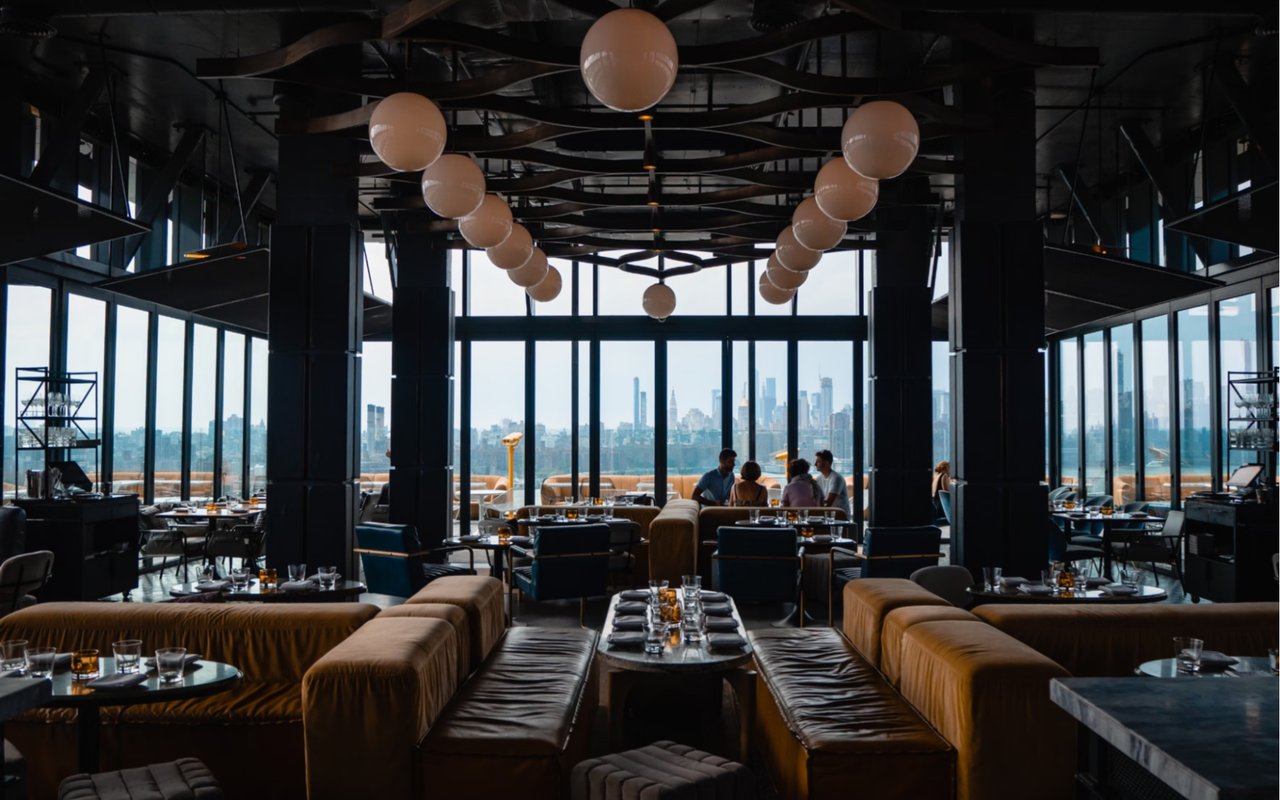
LIC's dining scene mirrors its architectural mix, combining sleek waterfront establishments with authentic industrial gems. Casa Enrique represents the neighborhood's culinary crown jewel—a humble Mexican spot that earned a Michelin star for authentic mole and regional dishes where reservations are essential. Waterfront dining at Maiella and American Brass under the Pepsi-Cola sign offers Italian and New American cuisine respectively, where diners pay premiums for outdoor seating with Manhattan views on summer evenings. Red Sorghum provides chic Chinese cuisine in moody red-lit spaces perfect for dates, while Jacx & Co functions as Court Square's upscale food hall serving as the neighborhood's "living room" for remote workers featuring curated vendors like Ghaya cafe and Taïm falafel. Centro Pizza Bar on Vernon Boulevard handles sit-down family meals while Slice delivers classic New York fold slices.
The nightlife centers on craft breweries rather than clubs, utilizing old warehouses for taprooms. Fifth Hammer Brewing serves as the community favorite hosting trivia and live bands, while LIC Beer Project offers grittier industrial vibes. Lost in Paradise rooftop provides tropical atmosphere with skyline views contrasting street-level pubs. Dive Bar LIC and The Huntress offer breaks from luxury high-rise aesthetics with relaxed neighborhood feels.
Cultural and entertainment options include MoMA PS1, a MoMA affiliate housed in a former public school famous for avant-garde exhibitions and the summer Warm Up outdoor music series. Culture Lab LIC operates in a converted warehouse parking lot hosting free weekend concerts, art exhibits, and comedy nights in an open-air community-driven setting. The Cliffs at LIC functions as a massive indoor rock-climbing gym serving as a major social hub for the neighborhood's active young professionals. Gantry Plaza State Park becomes the "front yard" where the summer "Live at the Gantries" series offers free outdoor performances and movies with the Manhattan skyline as backdrop.
LIC delivers highly functional grocery and essential shopping but lacks leisurely retail therapy for clothing and department stores. The grocery landscape strengthened significantly with Trader Joe's arrival in Court Square, providing affordable staples in an area previously dominated by expensive markets. H Mart on Northern Boulevard functions as a massive destination supermarket for Asian groceries, fresh produce, and a bustling food court. Foodcellar locations on the waterfront and Court Square serve as the neighborhood's "Whole Foods" with high-end organic options priced accordingly.
Vernon Boulevard functions as the closest approximation to Main Street, featuring boutique wine shops, independent pet stores popular given the high dog population, and small gift shops. Jackson Avenue slowly fills with modern retail including Sephora and high-end urgent care facilities but remains somewhat fragmented. The Costco on the Astoria-LIC border represents a massive lifestyle perk for families in high-rises—having warehouse shopping within five minutes by car or cheap Uber is a rarity for NYC dwellers. For mall shopping, residents take the 7 train to Hudson Yards fifteen minutes away or walk over the Pulaski Bridge to Greenpoint for vintage and boutique shopping, as major clothing retailers like Gap and Zara don't operate in LIC.
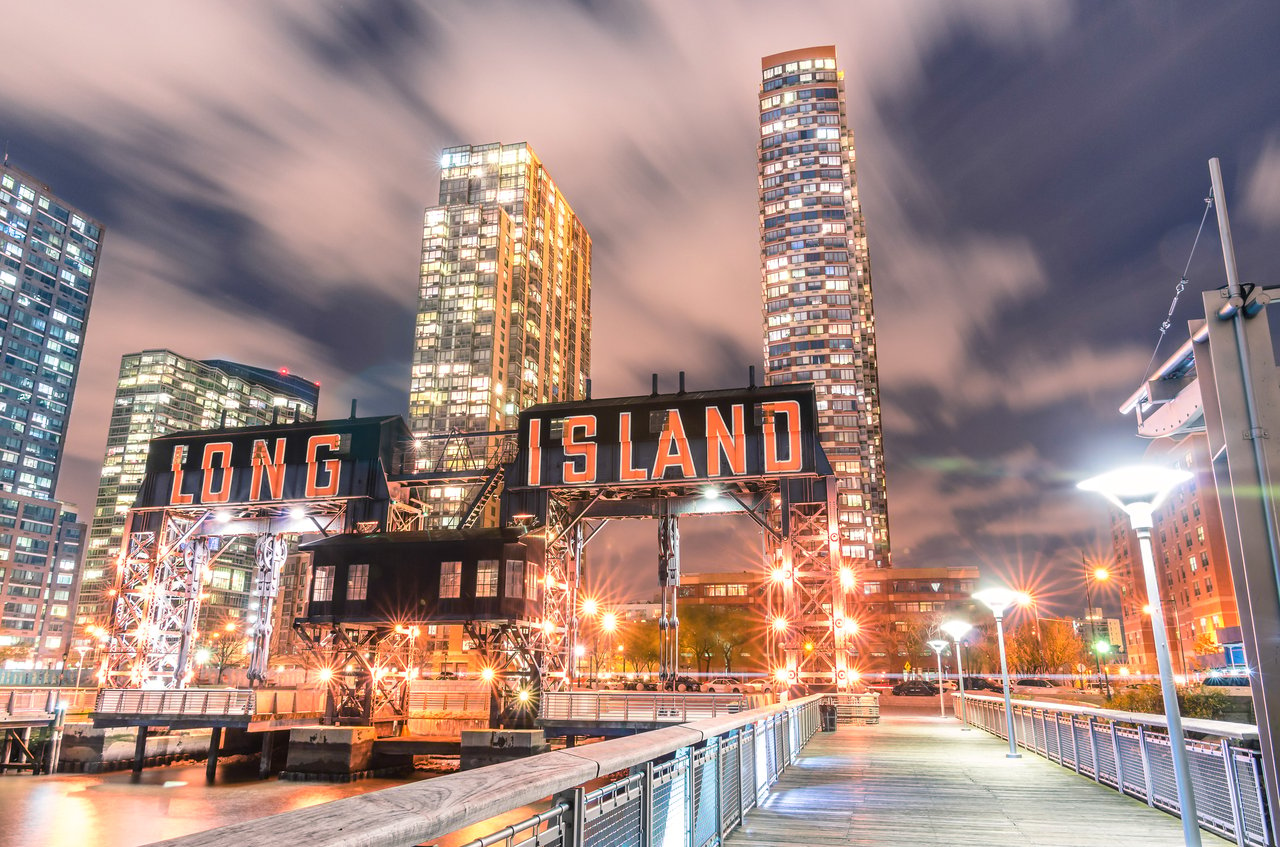
Long Island City's waterfront parks represent the neighborhood's crown jewel, purpose-built for modern recreation and flood resilience. Gantry Plaza State Park offers manicured, scenic space where the iconic Pepsi-Cola sign and restored industrial gantries frame four piers for fishing and walking, manicured gardens, and famous wooden lounge chairs overlooking the United Nations. The park excels for sunbathing, reading, and sunset photography. Hunter's Point South Park provides wilder, more active space with newer extensions featuring tidal marshes and native grasses designed to flood during storms. The 30-foot cantilevered viewing platform, central oval turf field popular for picnics and frisbee, and urban "beach" with sand but no swimming create diverse activity zones. The LIC Community Boathouse offers free kayaking sessions from the designated kayak launch during summer months.
Rainbow Playground in Gantry State Park provides large, modern play structures with water features popular with families, while Murray Playground on 45th Avenue offers more traditional neighborhood park facilities with synthetic turf soccer field, dog run, and newly renovated play equipment. Dog runs at Gantry Plaza waterfront and Murray Playground serve the neighborhood's substantial canine population. The Cliffs at LIC functions as an indoor recreational community hub with massive rock-climbing facilities for the active resident base.
Golf requires driving to Douglaston or Flushing for outdoor courses, though Five Iron Golf and luxury building simulators provide high-end indoor alternatives. Tennis and pickleball courts remain limited, with residents utilizing Court Square facilities or traveling to Astoria Park. The waterfront infrastructure supports active lifestyles with continuous promenades for running, cycling, and walking that connect parks into a cohesive recreational corridor.
LIC's school landscape requires careful navigation due to overcrowding from rapid residential construction. Even zoned families must verify seat availability as waitlists have historically been problematic. P.S./I.S. 78Q (The Hunters Point School) serves PK-8 and represents the neighborhood's gold standard public school, highly rated for test scores and parental involvement. Located directly on the waterfront at Center Boulevard, it provides exceptional convenience for tower residents but suffers from capacity constraints. P.S. 384 (Hunters Point Elementary) opened as a newer PK-5 school to alleviate P.S. 78 overcrowding, quickly gaining strong reputation with modern facilities near the river. Hunter's Point Community Middle School focuses on ecology and sustainability fitting for its wetlands location, operating as a smaller well-regarded option.
High schools operate on application-based admission. Bard High School Early College Queens on Thomson Avenue ranks among NYC's most prestigious specialized high schools where students graduate with both Regents diplomas and Associate's degrees. The Academy for Careers in Television and Film leverages LIC's connection to Silvercup Studios as a highly rated career and technical education school. The Academy of American Studies on the LIC-Astoria border offers strong humanities and history programs.
Private K-12 schools remain scarce within LIC borders unlike Manhattan or Brooklyn Heights. Evangel Christian School provides one of the few local K-12 private options. Preschool options are abundant with franchises like The Learning Experience in Court Square, Bright Horizons on the waterfront popular with corporate employees, and boutique options like City Owlets highly rated for play-based learning. LaGuardia Community College (CUNY) maintains massive presence focusing on workforce development and arts, while CUNY School of Law at 2 Court Square operates as the nation's premier public interest law school. Cornell Tech on Roosevelt Island sits one subway stop or short ferry ride away, with many faculty and graduate students living in LIC and integrating the neighborhood into the city's tech ecosystem.
Long Island City ranks among NYC's most well-connected neighborhoods outside Manhattan, though January 2025 Congestion Pricing implementation shifted calculations for car owners. The subway system provides the core appeal with multiple lines offering "one-stop" access to Manhattan. The 7 train runs from Vernon Boulevard-Jackson Avenue and Court Square to Grand Central in approximately four minutes, serving as the neighborhood workhorse though prone to weekend construction shutdowns. The E and M trains from Court Square-23rd Street provide rapid access to Midtown West and Upper East Side, while N, W, and R trains accessible at Queens Plaza or Queensboro Plaza connect to 59th Street-Lexington and the Broadway line. The G train uniquely doesn't serve Manhattan but connects LIC to Greenpoint and Williamsburg in minutes.
NYC Ferry operates from Hunter's Point South and Long Island City (Gantry Plaza) stops connecting to East 34th Street Midtown and Wall Street-Pier 11. For many residents this replaces subway commutes entirely, offering open-air travel with onboard bars and no subway crowds. However, the $4 ticket costs more than subway fare and winter frequency decreases. The Queensboro Bridge (Ed Koch Bridge) connects LIC directly to 59th Street while the Pulaski Bridge reaches Greenpoint Brooklyn.
Congestion Pricing implementation in January 2025 significantly impacts car commuting. While the Queensboro Bridge itself remains toll-free, driving into Manhattan below 60th Street incurs approximately $9 peak tolls. This made car commuting to Midtown substantially more expensive, pushing more residents toward ferry and subway options. The Long Island City and Hunterspoint Avenue LIRR stations offer limited but strategic service to Long Island bypassing Penn Station crowds. Airport access remains a neighborhood strength with LaGuardia 15-20 minutes by car and JFK approximately 40 minutes, positioning LIC as a sweet spot for frequent travelers.
LIC lacks traditional estates but specific micro-neighborhoods and buildings function as status symbols. Center Boulevard represents the "Gold Coast" waterfront strip facing the United Nations where high-income renters and condo owners pay premiums for unobstructed Manhattan views. Key buildings include 4610 and 4545 Center Boulevard (TF Cornerstone rental towers behind the Pepsi-Cola sign) and The View at East Coast at 4630 Center Boulevard, one of the few condo buildings directly on water where most are rentals.
The Hunters Point Historic District along 45th Avenue between 21st and 23rd Streets functions as a two-block time capsule of 1870s Italianate rowhouses resembling Brooklyn. These brownstones offer the rarest commodity in LIC—historic charm amidst glass towers—and rarely trade. When available they command $2.5-4 million depending on condition, appealing to buyers valuing space and character over doormen and amenities.
Malt Drive in Hunter's Point South represents the new frontier, a brand-new planned community opened 2024-2025 with its own park, school access, and state-of-the-art towers like South Point and North Point. The development feels like a "city within a city," slightly removed from subway noise but quieter and greener than established areas. Skyline Tower in Court Square stands as the tallest residential building in Queens at 67 stories, serving as the premier address for "views from the clouds" with direct subway access (entrance virtually inside the building) and comprehensive amenities targeting busy professionals.
Long Island City exemplifies successful urban transformation, converting post-industrial waterfront into one of New York City's most connected residential neighborhoods. The combination of sub-five-minute Manhattan commutes, purpose-built waterfront parks, and modern high-rise living attracts young professionals, families, and international residents seeking convenience and contemporary amenities. The market's high inventory driven by constant construction favors buyers and renters while providing investment opportunities focused on rental yield rather than rapid appreciation. Challenges include tax abatement phase-outs requiring strict due diligence, school overcrowding demanding capacity verification, and flood zone considerations for waterfront properties.
The neighborhood's identity balances vertical density with surprising historic pockets, craft brewery culture with waterfront dining, and transit efficiency with outdoor recreation. Buyers prioritizing short Manhattan commutes, dog-friendly environments, and turn-key modern living find exceptional value, while those seeking traditional neighborhood retail, established school infrastructure, or protected property appreciation may find better fits elsewhere. LIC's evolution continues with new developments in Hunter's Point South and ongoing cultural institution expansion, suggesting the neighborhood's transformation from industrial relic to residential destination remains incomplete. For those valuing proximity over history and amenities over authenticity, Long Island City delivers a lifestyle focused squarely on contemporary urban convenience.
There's plenty to do around Long Island City, including shopping, dining, nightlife, parks, and more. Data provided by Walk Score and Yelp.
Explore popular things to do in the area, including Whitsons Food Srvcs, Love Grace, and Grandavenue Food.
| Name | Category | Distance | Reviews |
Ratings by
Yelp
|
|---|---|---|---|---|
| Dining | 0.55 miles | 0 reviews | 0/5 stars | |
| Dining · $$$ | 0.61 miles | 13 reviews | 3/5 stars | |
| Dining | 0.76 miles | 0 reviews | 0/5 stars | |
| Dining | 1.11 miles | 0 reviews | 0/5 stars | |
| Active | 0.35 miles | 1 review | 5/5 stars | |
| Active | 0.85 miles | 1 review | 4/5 stars | |
| Beauty | 0.35 miles | 0 reviews | 0/5 stars | |
| Beauty | 0.4 miles | 0 reviews | 0/5 stars | |
| Beauty | 0.4 miles | 0 reviews | 0/5 stars | |
| Beauty | 0.56 miles | 0 reviews | 0/5 stars | |
|
|
||||
|
|
||||
|
|
||||
|
|
||||
|
|
||||
|
|
Long Island City has 19,210 households, with an average household size of 2. Data provided by the U.S. Census Bureau. Here’s what the people living in Long Island City do for work — and how long it takes them to get there. Data provided by the U.S. Census Bureau. 39,573 people call Long Island City home. The population density is 37,900 and the largest age group is Data provided by the U.S. Census Bureau.
Total Population
Population Density Population Density This is the number of people per square mile in a neighborhood.
Median Age
Men vs Women
Population by Age Group
0-9 Years
10-17 Years
18-24 Years
25-64 Years
65-74 Years
75+ Years
Education Level
Total Households
Average Household Size
Average individual Income
Households with Children
With Children:
Without Children:
Marital Status
Blue vs White Collar Workers
Blue Collar:
White Collar: