205,232 people live in Upper East Side, where the median age is 44 and the average individual income is $147,442. Data provided by the U.S. Census Bureau.
Total Population
Median Age
Population Density Population Density This is the number of people per square mile in a neighborhood.
Average individual Income
The Upper East Side is the kind of neighborhood that defines what people picture when they imagine living in Manhattan. Tree-lined side streets, limestone facades, doormen at attention, and Central Park as a front yard. But beneath the cinematic surface is one of the most nuanced and rewarding real estate markets in New York City — and one of the most misunderstood. As agents who walk these blocks every day at Keller Williams NYC, we wrote this guide to give buyers, renters, and relocators a clear, honest look at what it actually means to live here in 2026.
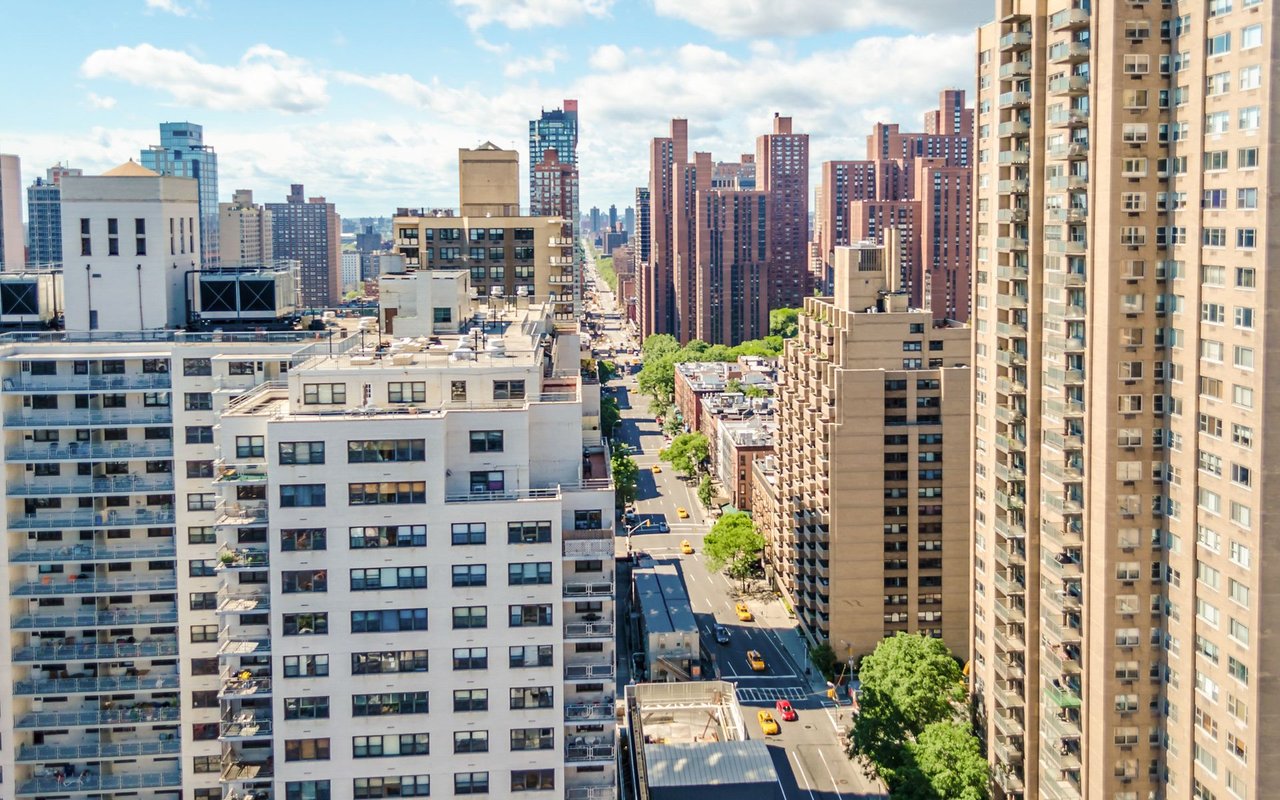
The Upper East Side, or UES as locals call it, occupies a clean rectangle on the eastern flank of Manhattan. Its western border is Fifth Avenue, where the neighborhood faces directly onto Central Park. Its eastern border is the East River. To the south, 59th Street and the Queensboro Bridge mark the line where the residential calm gives way to the commercial crush of Midtown. To the north, 96th Street ushers in the transition into East Harlem.
The vibe here is best described as timeless and understated. Where Downtown hums with creative energy and Brooklyn trades in artsy grit, the Upper East Side moves at a more deliberate pace. Walking these streets feels like stepping into a classic New York film — pristine townhouses, uniformed doormen hailing cabs, world-class museums steps from your doorstep. That said, the character changes meaningfully as you move east. The Gold Coast stretch between Fifth and Lexington is historic, hushed, and deeply moneyed. Once you cross to First and Second Avenues, particularly in Yorkville, the energy turns younger, more accessible, and noticeably more social.
The neighborhood's residents reflect that range. You will find multi-generational New York families, CEOs, and philanthropists anchoring the grand co-ops on Fifth and Park Avenues. You will also find a thriving population of young professionals and growing families who have moved east in significant numbers since the Second Avenue Subway opened in 2017, drawn by relative value, top-tier schools, and a quieter quality of life than they could find downtown.
To understand why the Upper East Side looks and feels the way it does today, you have to understand four distinct eras that shaped it.
In the 18th and early 19th centuries, this was farmland. Wealthy New Yorkers used the area as a rural escape from the disease and overcrowding of Lower Manhattan. The first real change came with infrastructure — the New York and Harlem Railroad in the 1830s and the elevated trains along Second and Third Avenues later in the century brought working-class German, Irish, and Central European immigrants to Yorkville, where they built tenements and factories.
While the eastern edge was industrializing, the western edge was about to transform into the most exclusive residential corridor in America. After Central Park was completed in the 1870s, titans like the Astors, Vanderbilts, Carnegies, and Fricks began building palatial limestone mansions along Fifth and Madison. The stretch quickly earned the nickname Millionaire's Row, and Andrew Carnegie's decision to build at 91st and Fifth in 1901 — far north of his peers, on a deliberately oversized parcel — is the reason the Cooper Hewitt sits where it does today.
By the 1920s, rising property taxes and the scarcity of land made the single-family urban mansion obsolete. The wealthy needed a new way to live grandly, and architects like Rosario Candela and J.E.R. Carpenter delivered it: the luxury pre-war co-op. These buildings along Park and Fifth offered sprawling duplexes with soaring ceilings, grand entry galleries, wood-burning fireplaces, and servants' quarters. The mansion went vertical.
After World War II, the elevated trains came down and developers rushed in with white-brick post-war high-rises. Many Gilded Age mansions were demolished. Others were saved by being converted into embassies, private schools, or museums — which is how the Fifth Avenue stretch from 82nd to 105th became Museum Mile. Today, the neighborhood layers all four eras at once. A 21st-century glass tower can sit blocks from a 1920s Candela co-op, which sits blocks from a 1900 limestone townhouse. That layered architectural inventory is exactly what gives UES real estate its enduring value.
The 2026 Upper East Side market is defined by one word: divergence. Co-ops and condos are behaving like two entirely different asset classes, and understanding that split is the single most important thing a buyer or seller needs to know before they engage.
The median sale price across all property types sits around $1.4 million, with year-over-year appreciation in the 2.9% to 3.8% range. Median days on market run between 76 and 88 days — not because the neighborhood is slow, but because well-priced properties move quickly while overpriced ones sit, dragging the average. On the rental side, the median rent has climbed past $4,940 per month, up more than 5% year-over-year, and that pressure continues to push fatigued renters into the buyer pool.
The co-op market, which represents the majority of UES inventory, is rewarding sellers who price realistically. Correctly priced co-ops are seeing bidding wars; overpriced co-ops with heavy maintenance fees are sitting indefinitely. The condo and new development sector, particularly in Yorkville and Carnegie Hill, is moving faster. Buyers in that segment are paying a premium for turn-key convenience, modern amenities, and the flexible ownership rules that condos offer. Price per square foot in those buildings is regularly pushing into the mid-to-upper $1,000s.
A few broader forces are shaping the year. Inventory across Manhattan is at multi-year lows because so many existing owners are locked into historically low mortgage rates and refusing to sell. That constraint is putting a natural floor under values. At the same time, the negotiation gap has tightened — properties are now trading at an average of just 2% to 3% below final asking price, a clear signal that buyers are ready to move decisively when a listing is priced to its actual value.
Outsiders treat the Upper East Side as one place. Locals know it is four very different ones, and your choice between them will likely matter more than your choice of building.
The Gold Coast runs from Fifth Avenue to Park Avenue, between 59th and 96th Streets. This is old money, full stop. Limestone Gilded Age mansions and legendary pre-war co-ops dominate the streetscape. The real estate here is the most expensive and the most restrictive in New York — predominantly co-ops requiring all-cash purchases, deep financial reserves, and demanding board interviews.
Carnegie Hill, roughly 86th to 96th between Fifth and Lexington, is the historic, family-centric enclave named for Andrew Carnegie himself. It feels like an upscale village within Manhattan — prestigious private schools, charming Madison Avenue boutiques, and strict historic preservation zoning that protects the brownstones and pre-war buildings. Boutique condo developments are rare here, and when they appear, they command a serious premium.
Lenox Hill stretches from 59th to 77th, Park Avenue to the East River. It is the most institutional and convenient stretch of the UES, anchored by Lenox Hill Hospital, Rockefeller University, premier design showrooms, and a dense concentration of hotels and restaurants. Real estate runs the full spectrum — grand townhouses near the park, post-war co-ops in the middle, and modern luxury rental towers near the river. It is particularly popular with medical professionals and corporate executives who want fast access to Midtown.
Yorkville, from 79th to 96th between Third Avenue and the East River, is the entry point. Historically a working-class German and Hungarian enclave, Yorkville is now the youngest and most energetic part of the UES. The Second Avenue Subway transformed it almost overnight, unlocking a wave of sleek modern condos and giving young professionals, first-time buyers, and growing families a way to live in an uptown neighborhood without an uptown budget.
The Upper East Side is essentially a living museum of American residential architecture, and the housing stock breaks into three distinct categories that every buyer should understand.
The first is the pre-war co-op. Built largely between 1900 and 1939 along Park and Fifth Avenues, these buildings — the work of Rosario Candela, J.E.R. Carpenter, and their contemporaries — are the most coveted residential properties in the city. Inside, the layouts mirror traditional houses: grand entry galleries, formal dining rooms, distinct public and private wings, wood-burning fireplaces, and ceilings that can run 10 to 12 feet. The lifestyle is white-glove, with hand-operated elevators, vaulted lobbies, and uniformed staff. From a real estate perspective, these buildings hold their value extraordinarily well, but they come with the most demanding board requirements in New York.
The second category is the limestone townhouse. The side streets of the Gold Coast and Carnegie Hill, especially the 60s through the 80s between Fifth and Madison, contain some of the finest single-family homes in the world. Built during the Gilded Age in Neo-French Renaissance, Beaux-Arts, and Neo-Federal styles, these homes feature wrought-iron gates, grand stoops, sweeping interior staircases, skylights, and private rear gardens. Many remain single-family residences. Others have been converted into private schools, foreign consulates, or boutique apartment buildings. When one comes to market, it is essentially a once-in-a-generation opportunity.
The third category is post-war and modern high-rise. The white-brick buildings of the 1950s through the 1970s — concentrated along Third Avenue and east — brought middle and upper-middle-class families to the neighborhood with light, efficient, modernist layouts. Today's new development pushes in the opposite direction, with glass-and-limestone luxury towers offering floor-to-ceiling Central Park or East River views and a full arsenal of amenities: subterranean pools, automated parking, private screening rooms, and smart-home integration. These newer buildings are where most of the condo activity in the current market is concentrated.
The cultural identity of the Upper East Side is inseparable from Museum Mile, the stretch of Fifth Avenue from 82nd to 105th Street that holds one of the densest concentrations of major art institutions on earth. The Metropolitan Museum of Art anchors the stretch at 82nd Street with over two million works spanning 5,000 years. The Solomon R. Guggenheim, Frank Lloyd Wright's spiral masterpiece at 88th Street, is itself a piece of architectural art. The Frick Collection on 70th Street offers Old Master paintings in the residential, domestic setting of Henry Clay Frick's mansion. Further north, the Cooper Hewitt occupies the Andrew Carnegie Mansion, and the Neue Galerie celebrates early 20th-century German and Austrian art in a Louis XIII-style townhouse.
What makes Museum Mile matter for residents, not just visitors, is the way it shapes the neighborhood's rhythm. The cultural weight of these institutions has locked in heavy landmarking around them, which prevents out-of-scale development and preserves the historic character of the surrounding blocks. The street vendors here sell independent art prints rather than tourist trinkets. Independent bookstores and quiet cafes thrive. And every June, the entire stretch closes to traffic for the Museum Mile Festival — a free, all-night block party where tens of thousands of New Yorkers wander in and out of the museums to live music. It is the kind of cultural infrastructure that does not just attract residents. It keeps them.
The Upper East Side is bookended by two parks, and the contrast between them is one of the neighborhood's quiet pleasures.
Central Park forms the entire western border, running from 59th to 96th Street along Fifth Avenue. For residents of the Gold Coast and Carnegie Hill, it functions as an extension of the living room. The eastern edge of the park holds some of its most distinctive landmarks: the Conservatory Water near 74th Street, famous for its model sailboat racing and its bronze statues of Alice in Wonderland and Hans Christian Andersen; the Jacqueline Kennedy Onassis Reservoir, with its 1.5-mile running track and cinematic skyline views; and Cedar Hill, the sun-drenched lawn that fills with picnickers from spring through fall.
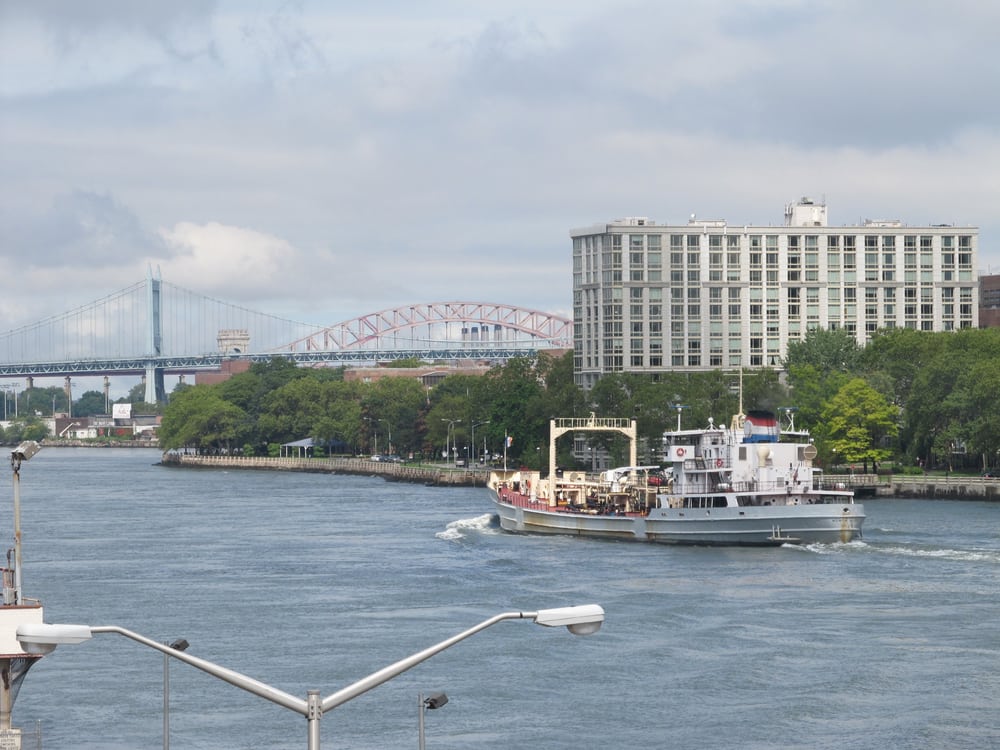
Carl Schurz Park, on the eastern edge of Yorkville from 84th to 90th Street, is the local secret. It is only 15 acres, but it punches far above its weight. A multi-level promenade hangs directly over the East River at Hell Gate, offering uninterrupted views of the Roosevelt Island Lighthouse and the Triborough Bridge. Gracie Mansion, the 1799 country manor that serves as the official residence of the Mayor of New York, sits at the northern end. And unlike Central Park, Carl Schurz belongs entirely to the neighborhood — packed with local families, neighbors reading on benches, and two of the most beloved dog runs in Manhattan.
The Upper East Side spent decades stereotyped as a culinary desert of country-club menus, and that stereotype is now genuinely dead. The dining scene in 2026 is one of the most quietly exciting in Manhattan, layered across three distinct tiers.
At the top are the old-guard institutions. Daniel, Chef Daniel Boulud's Michelin-starred Neo-Classical flagship on 65th Street, remains the gold standard for grand French fine dining in the city. Bemelmans Bar inside the Carlyle Hotel offers a master class in jazz-age luxury — live piano, stiff martinis, and walls hand-painted by Ludwig Bemelmans, the illustrator behind the Madeline books. And J.G. Melon, the cash-only pub on 74th and Third that has been operating since 1972, serves what most New Yorkers consider the best no-nonsense burger in the city.
The middle tier is the new wave of decorated chefs migrating uptown. Sushi Noz holds two Michelin stars on 78th Street, where Chef Nozomu Abe runs a traditional Edomae omakase from a counter built entirely of 200-year-old Hinoki wood. Essential by Christophe, on Columbus in the 80s, has earned a Michelin star with Chef Christophe Bellanca's modern, approachable French cooking.
The third tier is the new openings driving the neighborhood's revival, concentrated heavily along Second and Third Avenues. Café Boulud has made a triumphant return on 63rd Street. The Felice wine bar group continues to expand. Newer bistros and wine bars like Chez Nick draw a trendy post-grad crowd looking for excellent natural wines and fresh handmade pastas without the formality of old-school Madison Avenue. The Upper East Side eats well now, at every price point.
Madison Avenue from 59th to 86th Street is one of the most famous luxury shopping corridors in the world, but it functions very differently from Fifth Avenue. Where Fifth caters to dense international tourist crowds, Madison offers a quieter, more curated, European-style street experience.
The southern stretch is anchored by the global flagships. Hermès operates a five-story flagship with a rooftop garden and atelier. Chanel, Giorgio Armani, and Oscar de la Renta occupy landmarked townhouses and meticulously designed storefronts. The shopping experience in these spaces is appointment-based and intensely personal — private styling rooms, in-house champagne service, and bespoke tailoring for both neighborhood residents and visiting global clientele.
What has changed in recent years is the arrival of a younger, more playful retail layer alongside the heritage houses. Modern romantic brands like Dôen and La DoubleJ, Italian knitwear specialists like Falconeri, and whimsical accessories designers like Susan Alexandra at 1088 Madison have brought new energy to the avenue. And tucked between the global names are the independent neighborhood gems — vintage curators like Upper East Vintage, small art galleries trading in rare estate jewelry, and provisions institutions like William Poll, the gourmet market that has operated on Lexington since 1921 and is still famous for its thin-crust potato chips.
The Upper East Side has the highest concentration of elite preparatory and independent schools in the United States, and that single fact shapes more of the neighborhood's real estate behavior than any other factor. Where you live within the UES is often a function of where your children go to school.
On the private side, tuition at top-tier prep schools now averages over $64,000 per year, with admissions rates that frequently fall below 10%. The all-girls cluster — Brearley, Chapin, Spence, and Nightingale-Bamford — is globally renowned for academic rigor and leadership development. Brearley and Chapin both operate from state-of-the-art facilities near the East River. Co-educational powerhouses like The Dalton School are known worldwide for the Dalton Plan, a progressive model built around individualized learning contracts. On the all-boys side, The Browning School and Allen-Stevenson offer highly structured K-12 and K-9 education with strong academic and athletic traditions. Regis High School on 84th Street is the outlier — an all-scholarship, tuition-free Jesuit high school for academically gifted Catholic young men, and consistently one of the top high schools in the country.
The public school system is just as competitive, and in many cases just as coveted. The UES sits within NYC District 2, home to some of the highest-performing public elementary and middle schools in the city. PS 6, the Lillie D. Blake School on 81st Street, is a legendary anchor that families deliberately relocate into the zone to access. PS 290 (Manhattan New School) and PS 77 (Lower Lab School) are equally celebrated. And Hunter College Elementary and High School, the tuition-free public program for gifted students administered by Hunter College on 94th Street, requires testing at age four and is statistically one of the most selective schools in the country at any level.
For most of its history, the Upper East Side had a reputation as a transit desert once you crossed Third Avenue. That reputation is now outdated, and the transformation has had a direct impact on real estate values throughout the neighborhood.
The north-south backbone remains the Lexington Avenue line. The 4 and 5 express trains run from 86th Street down to Grand Central, Union Square, and the Financial District in a matter of minutes. The 6 local makes frequent stops at 59th, 68th, 77th, 86th, and 96th. The line serves an enormous population and is famously crowded at peak hours, but it remains the fastest connection between the UES and Lower Manhattan.
The game-changer was the Second Avenue Subway, which opened the Q train through Yorkville in 2017. The deep-cavern stations at 72nd, 86th, and 96th Streets provide a one-seat ride directly through Midtown, Times Square, Union Square, Canal Street, and into Brooklyn. It effectively halved commute times for residents living near the East River and triggered the wave of new condo development that has reshaped Yorkville over the past decade.
Crosstown access is handled by a network of bus routes that use the sunken transverse roads beneath Central Park. The M86 Select Bus Service runs along 86th Street with off-board fare payment, reaching the Upper West Side in under fifteen minutes. The M72 connects 72nd Street to Lincoln Center, and the M96 handles the northern crosstown route. For UES residents who work or have family on the West Side, these buses are far faster than any subway alternative.
There are trendier neighborhoods in Manhattan. There are very few better ones for raising children, and that distinction is the single biggest driver of the residential market here.
The fundamentals are exceptional. The Upper East Side consistently ranks among the safest residential districts in New York City. Streets are clean, well-lit, and heavily patrolled. Doormen function as informal neighborhood watch. Avenues are wide and stroller-friendly. Traffic moves at a more disciplined pace than in commercial Midtown. For parents coming from outside the city, that combination of urban access and residential predictability is often the deciding factor.
The green space is unmatched. Children grow up steps from the Ancient Playground behind The Met, the Conservatory Water for sailing model boats, and the wide-open lawns where youth sports leagues run on weekends. On the eastern side, Carl Schurz offers fully enclosed, age-segmented playgrounds that double as a tight social hub for local parents and nannies. The proximity to elite schools eliminates long bus commutes — every morning the avenues fill with kids walking to class together, often with friends from their own building. And the supporting infrastructure is built around children: the 92nd Street Y offers world-class youth gymnastics, swimming, music, and art programs, alongside an entire ecosystem of tutoring centers, youth theater groups, and children's clothing boutiques.
The Upper East Side does not accommodate families. It prioritizes them. That is reflected in how restaurants treat children, how pediatric care is concentrated here, and how the neighborhood maintains a tight-knit village feel inside one of the largest cities in the world.
The old line about the Upper East Side going to sleep at 9 PM is no longer accurate. The nightlife is genuinely good now — just sophisticated rather than chaotic, and layered across three distinct social moods.
The first layer is the wine bar scene. The neighborhood has become a haven for intimate, design-forward wine spots perfect for second dates and late-night conversations. Felice's expanding outposts offer biodynamic Italian and French wines paired with excellent small plates. The atmosphere is dim, the sommeliers are knowledgeable, and the crowd skews intellectual and professional.
The second layer is the legendary luxury lounges. Bemelmans Bar at the Carlyle and The Mark Lounge at The Mark Hotel are the crown jewels of classic New York nightlife. Bemelmans offers live jazz piano and old-school jacket-required service. The Mark provides a sleek, Jean-Georges-fueled cocktail experience. Tucked behind unassuming storefronts on Second and Third Avenues, you will also find beautifully executed hidden bars trading in artisanal ice, custom bitters, and moody leather banquettes that rival anything downtown.
The third layer, and the one that has changed the neighborhood most, is Yorkville's bar strip. Along Second and Third Avenues between 79th and 89th Streets, the energy pivots into a high-volume, unpretentious gauntlet of bars popular with young professionals, medical residents, and recent college graduates. The Penrose, a sprawling gastropub with phenomenal craft cocktails, is the anchor. Avoca draws the same crowd. And spots like Ethyl's Alcohol & Food bring a 1970s-themed dance-bar energy with go-go dancers, stiff drinks, and late-night burgers that prove the Upper East Side can absolutely let its hair down when it wants to.
Whether the Upper East Side is the right neighborhood for you comes down to budget, timeline, and how you actually want to live. From a real estate standpoint, the UES is one of the most misunderstood markets in Manhattan — frequently labeled as exclusively unaffordable, when in reality it represents one of the most financially diverse housing options in the borough.
For buyers, the co-op value proposition is genuinely remarkable. You can purchase a spacious, classic pre-war one-bedroom co-op on the Upper East Side for significantly less than a comparable apartment downtown. The reason is straightforward: UES co-op boards are notoriously strict. They typically require 20% to 50% in cash, sometimes 100% on the Gold Coast, along with substantial post-closing liquidity and an invasive financial interview. If you have the reserves to clear those requirements, you are getting more square footage and better architecture per dollar than almost anywhere else in Manhattan. If you want flexibility — the ability to sublet, purchase through an LLC, or bypass a board interview entirely — you will need to move into the condo market, which is concentrated in newer Yorkville and Carnegie Hill developments. You will pay a steep premium per square foot, but you are buying optionality.
For renters, the Upper East Side functions as a sanctuary of relative affordability. Yorkville and Lenox Hill are packed with four- and five-story walk-up buildings offering safe, clean, reasonably sized apartments at rents below the comparable downtown equivalents. The trade-off is straightforward — if your happiness depends on walking to a different underground show every night, the residential predictability here will feel a little too quiet.
The honest verdict is this: the Upper East Side is the right neighborhood for you if you value green space, quiet nights, architectural integrity, top schools, and getting more home for your money. It is the wrong neighborhood if you thrive on cutting-edge nightlife energy and find doormen, strollers, and leashed dogs a little too traditional for your taste. Both answers are valid. The key is being honest with yourself about which one applies before you sign anything.
Keller Williams NYC is a full-service luxury real estate brokerage with over 600 agents representing buyers, sellers, and renters across every neighborhood in Manhattan, including deep, daily experience throughout the Upper East Side. Our team understands the nuance that this neighborhood demands — the difference between a Candela co-op and a post-war white-brick, what a Gold Coast board will and will not approve, where the value sits in Yorkville right now, and which blocks make sense for which kind of buyer.
Whether you are relocating to New York, searching for your first uptown home, listing a longtime residence, or exploring the rental market, we can help you make the right move with confidence. Our Relocation Division specializes in working with clients moving to NYC from out of state or abroad, and our agents bring genuine local expertise to every transaction.
Contact Keller Williams NYC to start the conversation, or browse current listings to see what is on the market on the Upper East Side today.
There's plenty to do around Upper East Side, including shopping, dining, nightlife, parks, and more. Data provided by Walk Score and Yelp.
Explore popular things to do in the area, including Buru Boutique, Helen Marx Books, and Dolce & Gabbana.
| Name | Category | Distance | Reviews |
Ratings by
Yelp
|
|---|---|---|---|---|
| Shopping | 0.26 miles | 1 review | 5/5 stars | |
| Shopping | 0.57 miles | 0 reviews | 0/5 stars | |
| Shopping | 0.59 miles | 0 reviews | 0/5 stars | |
| Shopping | 0.64 miles | 1 review | 2/5 stars | |
| Active | 0.22 miles | 1 review | 5/5 stars | |
| Active | 0.23 miles | 1 review | 4/5 stars | |
| Active | 0.4 miles | 0 reviews | 0/5 stars | |
| Active | 0.51 miles | 0 reviews | 0/5 stars | |
| Active | 0.52 miles | 0 reviews | 0/5 stars | |
| Active | 0.54 miles | 0 reviews | 0/5 stars | |
| Active | 0.66 miles | 1 review | 5/5 stars | |
| Active | 0.71 miles | 0 reviews | 0/5 stars | |
| Active | 0.73 miles | 0 reviews | 0/5 stars | |
| Beauty | 0.22 miles | 1 review | 1/5 stars | |
| Beauty | 0.27 miles | 0 reviews | 0/5 stars | |
| Beauty | 0.34 miles | 0 reviews | 0/5 stars | |
| Beauty | 0.35 miles | 4 reviews | 3/5 stars | |
| Beauty | 0.61 miles | 15 reviews | 1.6/5 stars | |
| Beauty | 0.75 miles | 0 reviews | 0/5 stars | |
| Beauty | 0.77 miles | 0 reviews | 0/5 stars | |
| Beauty | 0.91 miles | 1 review | 5/5 stars | |
| Beauty | 0.96 miles | 0 reviews | 0/5 stars | |
|
|
||||
|
|
||||
|
|
||||
|
|
||||
|
|
||||
|
|
Upper East Side has 108,027 households, with an average household size of 2. Data provided by the U.S. Census Bureau. Here’s what the people living in Upper East Side do for work — and how long it takes them to get there. Data provided by the U.S. Census Bureau. 205,232 people call Upper East Side home. The population density is 142,265 and the largest age group is Data provided by the U.S. Census Bureau.
Total Population
Population Density Population Density This is the number of people per square mile in a neighborhood.
Median Age
Men vs Women
Population by Age Group
0-9 Years
10-17 Years
18-24 Years
25-64 Years
65-74 Years
75+ Years
Education Level
Total Households
Average Household Size
Average individual Income
Households with Children
With Children:
Without Children:
Marital Status
Blue vs White Collar Workers
Blue Collar:
White Collar: