217,067 people live in Upper West Side, where the median age is 45 and the average individual income is $126,498. Data provided by the U.S. Census Bureau.
Total Population
Median Age
Population Density Population Density This is the number of people per square mile in a neighborhood.
Average individual Income
The Upper West Side is one of Manhattan's most iconic and deeply rooted neighborhoods, stretching from 59th Street up to 110th Street and sandwiched perfectly between Central Park and Riverside Park. It strikes a rare balance between vibrant urban culture and relaxed, residential charm—a place where opera singers, Nobel laureates, and multi-generational families share the same tree-lined sidewalks. This guide walks you through what makes the neighborhood tick: its history, its housing stock, its rhythms, and the practical realities of calling it home.
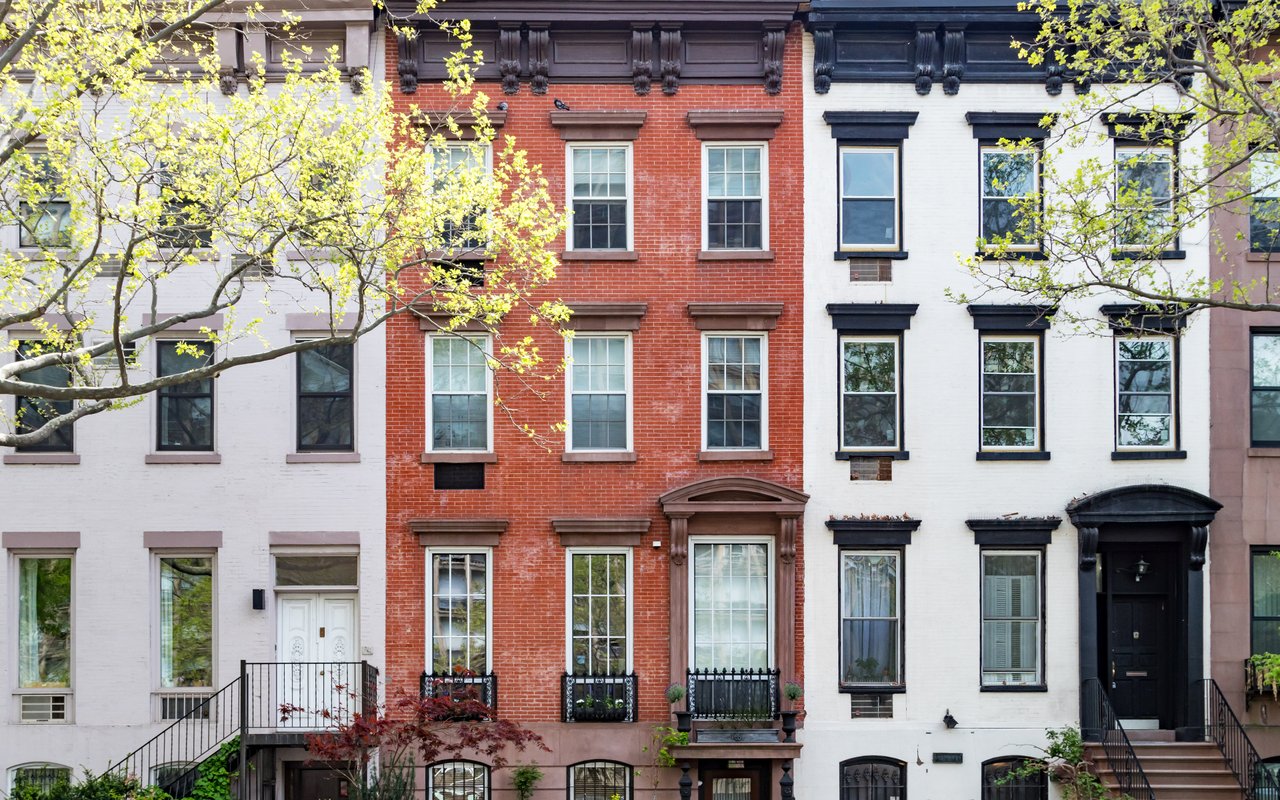
If the Upper East Side is characterized by old-money, sleek, understated luxury, the Upper West Side prides itself on being the intellectual, cultural, and artistic heart of the city. It is a neighborhood where people settle in and stay for decades, and its character is unmistakable the moment you turn off Broadway onto a quiet, brownstone-lined side street.
A few elements define the UWS more than any others. First is the geography: it is one of the very few places in Manhattan where residents are never more than a few blocks from massive green space, with Central Park to the east and Riverside Park along the Hudson to the west. Second is the architecture—visually stunning, tree-lined side streets filled with late 19th-century brownstones and Romanesque Revival townhouses, anchored on the avenues by massive, historic prewar apartment buildings that have shaped New York's residential identity for over a century. Third is the cultural gravity: the UWS is home to Lincoln Center for the Performing Arts (which houses the Metropolitan Opera, New York City Ballet, and New York Philharmonic) and the American Museum of Natural History, two of the most important cultural institutions in the world.
Underpinning it all is a distinct food-and-community vibe. The neighborhood has an enduring literary and academic energy, heavily influenced by its proximity to Columbia University, and legendary culinary institutions like Zabar's and Barney Greengrass reinforce a multi-generational, community-focused atmosphere. This isn't a neighborhood you pass through—it's one people build their lives around.
The transformation of the Upper West Side from rural farmland into one of the most desirable residential zip codes in the world is a classic story of New York expansion, and understanding it helps explain why the neighborhood feels the way it does today.
Long before it was gridded out, the Dutch called this area Bloendendael, or Bloomingdale—"vale of flowers." It consisted of rolling hills, farm plots, and country estates for wealthy tobacco growers and merchants, with shipping docks and small manufacturing hamlets running along the Hudson. For most of the early 19th century, it remained entirely isolated from the bustling city center miles down south.
The neighborhood's destiny changed dramatically in the late 1870s and 1880s with two major developments: the construction of Central Park and the introduction of the Ninth Avenue Elevated train line. Suddenly, upper Manhattan was accessible. In 1884, a developer named Edward Clark built a massive, luxurious apartment building on 72nd Street and Central Park West. Because the area was still so sparse and considered the middle of nowhere, people joked that it might as well be in the "Dakota Territory." Clark leaned into the joke and named it The Dakota—the same building that would later become famously home to John Lennon and Yoko Ono. It was an instant success, proving that the wealthy would willingly trade their downtown townhouses for upscale apartment living.
When the city's first subway line opened along Broadway in 1904, a massive building boom followed. Sprawling luxury complexes like the Ansonia, the San Remo, and the Beresford redefined the skyline. The neighborhood simultaneously became a major cultural melting pot: Columbia University moved to nearby Morningside Heights in 1897, drawing professors, writers, and thinkers uptown. In the 1920s and 30s, a large influx of Jewish immigrants—including many fleeing Nazi Germany—settled here, establishing the synagogues, delis, and intellectual clubs that still anchor the UWS today. Meanwhile, the southern portion of the neighborhood, known as San Juan Hill, became a vibrant working-class African American and Puerto Rican community and a cradle for jazz music.
By the mid-20th century, parts of the UWS had fallen into economic decline. In the late 1950s, the city targeted San Juan Hill for a massive "urban renewal" project, demolishing the tenement buildings (the empty lots were famously used to film West Side Story before construction began) to make way for Lincoln Center. While the displacement of thousands of families remains a controversial chapter, the opening of Lincoln Center in the 1960s permanently cemented the Upper West Side as New York's premier cultural hub. Landmark preservation laws enacted in the late 20th century then ensured the neighborhood's beautiful prewar character would be protected from glass-and-steel skyscrapers—preserving the historic charm residents enjoy today.
As you move from south to north through the Upper West Side, the neighborhood's architectural style, demographic energy, and pricing shift noticeably. The UWS isn't monolithic—it's a stack of distinct sub-neighborhoods, each with its own personality.
Lincoln Square (59th to 72nd Street) is the flashy, affluent southern anchor of the UWS, serving as the bridge between Midtown's corporate pulse and the quieter residential areas to the north. The vibe is high-brow, bustling, and modern—more manicured and commercial than the rest of the neighborhood. Lincoln Center is the crown jewel, but the area also includes Columbus Circle, corporate headquarters of major media companies, and Fordham University's Lincoln Center campus. Unlike the historic brownstones further north, the skyline here is defined by soaring, post-war luxury high-rises and glass condos with views over Central Park and the Hudson River.
Moving up the neighborhood, Manhattan Valley (100th to 110th Street) sits tucked into the northeast corner, in a geographic depression (hence the "valley") between Central Park West and Broadway. Historically known as the Bloomingdale District, it retains a distinct flavor. Once solidly working-class and community-oriented, it has evolved into a popular residential pocket for people seeking a slightly quieter, more laid-back pace while remaining steps from Central Park. The architectural marvel of the Cathedral of St. John the Divine looms just north, and the neighborhood streets are known for community gardens and independent shops. Housing here leans toward beautiful late 19th-century brick tenements and brownstones, offering a more understated architectural profile than the grand avenue buildings further south.
Morningside Heights (110th to 125th Street) technically bridges the gap between the Upper West Side and Harlem, but it functions as its own distinctive enclave—often affectionately nicknamed the "Academic Acropolis" of New York. The streets are perpetually filled with students, professors, and street-side book vendors. The massive campus of Columbia University dominates the landscape, alongside Barnard College, the Manhattan School of Music, and Riverside Church. Housing is defined by stately, turn-of-the-century mid-rise apartment buildings originally designed to house university faculty and families, flanked by the sprawling gothic and neoclassical architecture of the local institutions.
The real estate market on the Upper West Side is famously robust, characterized by low inventory and high demand from buyers and renters who view the neighborhood as a long-term haven rather than a temporary stop. The most important dynamic to understand is the sharp split between co-ops and condos. Cooperative apartments make up roughly 60% of the available for-sale inventory, and because co-ops require rigorous board approvals and often demand high down payments, they trade at a significant discount compared to condos, which attract international buyers and those looking for a smoother transaction.
Here's how the numbers currently break down:
Metric | Upper West Side Average | Key Market Driver |
|---|---|---|
Median Sale Price | $1.3M – $1.5M | Strong demand for prewar 1- and 2-bedroom co-ops |
Condo Median Price | ~$1.76M – $2.1M | Premium pricing for modern buildings and flexible buying rules |
Co-op Median Price | ~$935K – $988K | More affordable, but requires strict board approval and high cash reserves |
Median Asking Rent | ~$4,800 – $5,200 / mo | Driven by high demand from young professionals and families |
The sub-neighborhoods play a major role in where these numbers land. Lincoln Square commands a steep premium, with average rents easily clearing $6,000/month thanks to its high-end doorman buildings and proximity to Midtown. Manhattan Valley and Morningside Heights offer relative value, with Morningside Heights seeing average rents closer to $4,300/month—making it a magnet for students, faculty, and anyone looking for a break from southern UWS prices without leaving the neighborhood entirely.
The architectural identity of the Upper West Side is completely inseparable from its history. The neighborhood stands as a beautifully preserved outdoor museum of late 19th- and early 20th-century residential design. While modern glass skyscrapers have popped up near Lincoln Square, the core of the UWS is fiercely protected by historic preservation districts.
The word "prewar" carries heavy cultural weight here. It refers to buildings constructed before World War II, primarily between the 1880s and 1930s, and to New Yorkers it implies a specific level of craftsmanship: plaster moldings, soaring 10-foot ceilings, solid oak herringbone floors, thick masonry walls that block out neighbor noise, and sprawling floor plans featuring "Classic Six" or "Classic Eight" room layouts, which include formal dining rooms and separate staff quarters. When buyers say they want prewar character, this is what they mean.
The avenue streetscapes are anchored by a legendary lineup of individually landmarked buildings. The Dakota (1 West 72nd Street), built in 1884, is the building that started it all—designed in a dramatic German Renaissance Revival style, it looks like a Gothic fortress complete with gables, dormers, and a deep, guarded central carriage courtyard, and it remains one of the most exclusive and historic residential addresses in the world. The Ansonia (2109 Broadway), completed in 1904 as a grand luxury residential hotel, is a breathtaking example of Parisian Beaux-Arts style with a heavily ornamented, sculptural limestone facade, sweeping iron balconies, and a massive mansard roof. Its quirky history includes an early 20th-century indoor cattle farm on the roof and a lobby fountain that once housed live seals. The Apthorp (2211 Broadway) occupies an entire city block, and this 1908 Italian Renaissance Revival masterpiece is famous for its colossal, vaulted limestone archways that open into a magnificent hidden central courtyard.
Look at the UWS from across Central Park and the skyline silhouette is defined by majestic, twin-towered prewar luxury buildings: The San Remo (1930) combines Neo-Renaissance details with Greek-inspired crowns, while The Eldorado (1931) and The Majestic lean heavily into sharp, soaring Art Deco geometric lines. Together, these buildings form one of the most recognizable residential skylines in the world.
What truly elevates the daily lifestyle of the Upper West Side is its geography. The entire neighborhood is bordered by two world-class park systems, and residents don't just "visit" the park—they live between them. The two spaces offer completely different daily rhythms, and understanding this is key to understanding what daily life on the UWS actually feels like.
Central Park West serves as the neighborhood's eastern boundary. Living on or near CPW means alignment with a historic, high-energy landscape. Step outside and you're immediately connected to Central Park's 843-acre expanse—the default location for morning runs around the Reservoir, picnics on Sheep Meadow, and weekend family trips to the park's multiple playgrounds. The atmosphere is dynamic, grand, and closely tied to the city's broader tourism and cultural scenes, acting as a majestic frame for the cross-town brownstone blocks.
On the western boundary sits Riverside Drive, fronting Riverside Park and overlooking the Hudson River. Conceived by legendary landscape architect Frederick Law Olmsted (who also co-designed Central Park), Riverside Park feels entirely different from its eastern counterpart. Because of Manhattan's natural topography, the park drops down toward the water in beautiful, stone-walled tiers, featuring sweeping lawns, tennis courts, community gardens, and the Hudson River Greenway—one of the city's premier protected cycling and running paths. Riverside Drive is significantly quieter, more intimate, and local in scale than Central Park West. There are fewer tourists, no major subway lines running directly beneath it, and the result is a peaceful, tree-shaded sanctuary where the main soundtrack is the wind off the river and the evening sunsets are spectacular.
For most UWS residents, the two parks aren't competing options—they're a daily rotation. Central Park is where you go to be part of the city; Riverside Park is where you go to escape it, without ever leaving your zip code.
The Upper West Side is arguably the cultural powerhouse of Manhattan. Its institutions are not just local neighborhood assets—they are global destinations that shape the worlds of music, theater, science, and art, and they're all within walking distance of each other.
Lincoln Center for the Performing Arts spans 16 acres and is the epicenter of classical music, dance, and theater. It serves as home base for the Metropolitan Opera, the New York City Ballet, and the New York Philharmonic (performing in the masterfully renovated David Geffen Hall). It also houses The Juilliard School and Lincoln Center Theater, which regularly stages massive, award-winning Broadway revivals at the Vivian Beaumont Theater. For UWS residents, dropping in for an evening performance is as casual as picking up dinner.
The American Museum of Natural History (AMNH) guards Central Park West between 77th and 81st Streets. Generations of visitors have marveled at its iconic dinosaur halls and the 94-foot-long blue whale model suspended in the Milstein Hall of Ocean Life. The museum's footprint expanded spectacularly with the Richard Gilder Center for Science, Education, and Innovation—an architectural marvel featuring cavernous, fluid concrete walls that look like natural slot canyons.
Beyond these two giants, the neighborhood is dense with cultural weight. The New-York Historical Society, located just across the street from AMNH, is New York's oldest museum (founded in 1804), housing an incredible collection of American artwork, historical artifacts, and a deeply moving look into the specific history of New York City. Further uptown on Broadway stands The Beacon Theatre, a historic 1929 movie palace known for its incredible acoustics and opulent, gilded interior. It is one of NYC's premier mid-sized rock and comedy venues, famously hosting legendary multi-night residencies for iconic musicians.
The UWS culinary scene beautifully bridges its old-school, immigrant-driven heritage with cutting-edge, critically acclaimed modern gastronomy. It's a neighborhood that takes food seriously, whether you're dressing up for a tasting menu or standing in line for a morning bagel.
You cannot understand the Upper West Side without understanding its Jewish culinary roots. In New York heritage, a "deli" sells hot meats while an "appetizing shop" sells "food that goes with bagels"—primarily fish and dairy. Zabar's, on 80th and Broadway, is more than a grocery store; it's a cultural institution where, for nearly a century, locals have crowded into narrow aisles for custom-sliced smoked salmon, artisanal cheeses, babka, and freshly roasted coffee. Barney Greengrass, affectionately known as "The Sturgeon King," has been serving legendary scrambled eggs with sturgeon, lox, and onions in a wonderfully unchanged, retro dining room on 86th Street since 1908. These aren't nostalgia acts—they're weekly rituals for tens of thousands of residents.
At the other end of the spectrum, the neighborhood features some of the most celebrated fine-dining tables in the city. Tatiana by Kwame Onwuachi, located right in Lincoln Center, has routinely been named one of the absolute best restaurants in New York. Chef Onwuachi serves a deeply personal, Afro-Caribbean-inflected menu that honors the history of San Juan Hill—the neighborhood displaced to build Lincoln Center itself. Jean-Georges, at the base of Central Park West, has held legendary status in NYC fine dining for decades with its impeccable French-Asian fusion tasting menus. Per Se, at Columbus Circle, is Thomas Keller's multi-Michelin-starred institution offering sweeping views of Central Park and a world-renowned French-American tasting menu.
The casual dining scene has boomed with exceptional diversity in recent years. The UWS has become a prime destination for pizza fanatics: Mama's Too! on 105th and Broadway changed the NYC pizza game with its hyper-crisp, caramelized-cheese crust square slices, while Brooklyn-born Lucia Pizza brings its highly-rated, expertly crafted thin-crust slices to Columbus Avenue. Saperavi UWS on Amsterdam Avenue introduces locals to the rich comfort of Georgian cuisine, featuring khachapuri (decadent cheese-filled bread) and savory khinkali (soup dumplings). Near Columbia, Hinds Hall by Ayat draws massive crowds for slow-cooked halal Palestinian feasts like Mansaf and Maklouba.
Shopping on the Upper West Side mirrors the lifestyle of its residents—practical yet sophisticated, deeply local, and favoring curated quality over fast fashion. Retail in the neighborhood is largely defined by two parallel avenues, each offering a completely different shopping experience.
Columbus Avenue, particularly the stretch from 67th to 82nd Streets, is the neighborhood's premier boutique corridor. Tree-canopied sidewalks frame a highly walkable mix of independent boutiques, contemporary designers, and luxury lifestyle brands. You'll find upscale staples alongside multi-generational neighborhood institutions like Liana, a family-run boutique known for high-end European and contemporary women's wear. Contemporary brands like Shishi offer accessible, trendy pieces, while M.M.LaFleur caters to the neighborhood's high population of working professionals. On Sundays, the Columbus Avenue Open Streets program closes the avenue to car traffic, turning the retail strip into an open-air pedestrian celebration where outdoor dining seamlessly merges with weekend boutique browsing.
Just one block west, Broadway serves as the bustling commercial spine of the UWS—this is where residents actually go to get things done. Broadway is dominated by massive prewar storefronts, daily essentials, and legendary specialty food markets. It's home to Harry's Shoes at 84th Street, an absolute neighborhood legend since 1975 and the default shoe store for multiple generations of Upper West Siders prioritizing quality, walkable footwear. Broadway also anchors the neighborhood's culinary identity, housing the flagship Zabar's, Trader Joe's, and massive bookstores and home goods retailers that handle the practical realities of Manhattan living. Between these two avenues, Amsterdam Avenue fills in with local service shops, cafés, and neighborhood hidden gems, while West End Avenue remains almost purely residential.
The Upper West Side is widely considered one of the premier family neighborhoods in Manhattan. It is intentionally designed for children, featuring a vast ecosystem of stroller-friendly wide sidewalks, world-class playgrounds, and a fierce community focus on education.
The neighborhood sits within NYC's School District 3, highly regarded for its elementary and middle schools. Institutions like P.S. 87 (William T. Sherman) and P.S. 199 (Jessie Isador Straus) are fiercely coveted by local parents, known for their robust PTA fundraising, enrichment programs, and tight-knit community involvement.
Alongside the public system, the UWS contains an extraordinary concentration of some of the oldest and most prestigious private schools in America. Trinity School on 91st Street, founded in 1709, is an ultra-selective K-12 powerhouse that consistently ranks among the top preparatory schools in the nation. Collegiate School on West End Avenue, founded in 1628 by the Dutch, holds the title of the oldest independent school in the United States and offers an elite all-boys K-12 education. The neighborhood is also a hub for diverse learning philosophies—Bank Street School for Children thrives on progressive, experiential learning, while institutions like Stephen Gaynor School and The Gateway School provide world-class, highly specialized education for children with language-based learning differences.
On any given afternoon, the neighborhood's true family character comes alive. After-school culture revolves around the parks—parents and nannies congregate at Central Park's Diana Ross Playground or Riverside Park's Hippo Playground. On weekends, family life centers around educational leisure: trips to the American Museum of Natural History, youth concerts at Lincoln Center, or children's classes at the JCC Manhattan (Jewish Community Center), which serves as a massive secular hub for community sports, swim lessons, and family programming for residents of all backgrounds. It is a neighborhood where children actually get to grow up with a distinct, neighborhood-centric childhood right in the middle of Manhattan.
Getting around the Upper West Side is exceptionally easy. The neighborhood is built on a highly efficient grid supported by two major subway arteries and robust bus routes, meaning you're rarely more than a five-minute walk from a station.
The Broadway Line (1, 2, 3 trains) runs directly beneath Broadway and functions as the neighborhood's commercial transit spine. The 1 train acts as the local workhorse, stopping every few blocks at 59th, 66th, 72nd, 79th, 86th, 96th, 103rd, and 110th Streets. The 2 and 3 trains are lightning-fast expresses that only stop at major hubs (72nd Street and 96th Street), and from 96th an express can drop you into Times Square in under 10 minutes or the Financial District in about 25. Along the eastern edge of the neighborhood, the Central Park West Line (A, B, C, D trains) hugs the park and connects directly to the Upper East Side (via 86th Street crosstown transfers) and Brooklyn. The C and B trains provide local service, while the A and D trains bypass the UWS after 59th Street/Columbus Circle to rocket straight up to 125th Street in Harlem.
Because Central Park acts as a massive physical barrier between the West and East sides, traveling horizontally requires specific routes—and this is where NYC's bus system shines. The M66, M72, M79-SBS, M86-SBS, and M96 run horizontally across the neighborhood, cutting through dedicated park traverses to drop you directly on the Upper East Side. The "SBS" (Select Bus Service) routes act like rapid transit, requiring curbside kiosk payment before boarding to keep the doors moving quickly. For north-south travel, the M5, M7, M10, and M104 glide up and down the main avenues, offering a scenic, above-ground alternative to the subways.
The Upper West Side is famous for its laid-back, conversational evening energy. You won't find the booming mega-clubs of the Meatpacking District or the gritty warehouse raves of Brooklyn here. Instead, UWS nightlife revolves around historic performance spaces, cozy wine bars, neighborhood dives, and legendary Irish pubs where the conversations are lively and the front doors stay open late.
The epicenter of casual nightlife is the Amsterdam Avenue strip, particularly between 72nd and 86th Streets. Walking down this stretch on a weekend evening offers a vibrant cross-section of the neighborhood. The Owl's Tail at 75th and Amsterdam sits directly across from the stage door of the historic Beacon Theatre and is the premier spot for a perfectly built seasonal craft cocktail and globally inspired small plates before or after a show. Prohibition at 84th and Columbus, a neighborhood staple since 1996, channels a contemporary "Roaring Twenties" supper club vibe and is famous for nightly live music acts ranging from blues and jazz to high-energy rock covers. Further uptown near the Manhattan Valley border, Nobody Told Me at 106th and Amsterdam serves exceptional, playful craft cocktails and fresh oysters to a hip, slightly more academic crowd.
The neighborhood's pub scene has real depth. The Dead Poet, a tiny wood-paneled Irish pub on Amsterdam between 81st and 82nd, is completely dedicated to literature—the menu features cocktails named after famous authors (like the Edgar Allan Poe), and the walls are lined with book-lined shelves and portraits of history's greatest writers. The Caledonia Bar, on Amsterdam between 80th and 81st, is a beautifully warm, unpretentious Scottish whisky den boasting a collection of over 250 single malts and a deeply knowledgeable bar staff. For classic, low-key New York neighborhood hangs, Dive 75 offers old-school board games, a fish tank, and a fantastic beer list, while Amsterdam Ale House anchors its corner with massive windows, outdoor seating, and plenty of TVs for sports fans.
The Upper West Side's demographic makeup reflects its reputation as Manhattan's intellectual and cultural haven. With a population of roughly 158,000 and a median age of 46, it skews slightly older and significantly more settled than transient, trend-chasing downtown neighborhoods. Nearly half of all households have an income crossing the $150,000 threshold, and a staggering 71% of residents hold a bachelor's or graduate degree.
The neighborhood is anchored by a handful of distinct "tribes" that together give the UWS its warm, village-like character. There are the Lifers—multi-generational families, retirees, and aging intellectuals who bought their spacious co-ops decades ago. They are the bedrock of the neighborhood, fiercely protective of local zoning laws, landmark status, and independent neighborhood shops. There's the Academic Crowd: professors, researchers, and graduate students from Columbia, Barnard, and Fordham Lincoln Center, who heavily influence the neighborhood's literary vibe and populate its independent bookstores, cafés, and political discussion groups. There are the Creatives and Performers—classical musicians, opera singers, ballet dancers, and theater actors who choose the UWS specifically to stay within walking distance of Lincoln Center and Juilliard. And there are the Established Families, drawn by top-tier schools and proximity to two massive park systems, who define the stroller-friendly, playground-community weekend rhythms.
Because the neighborhood values low-key privacy over flashiness, a massive roster of high-profile actors, writers, and comedians call it home. You are highly likely to spot comedy icons like Jerry Seinfeld, Steve Martin, Tina Fey, or Amy Schumer grabbing coffee or walking their dogs. Major dramatic actors like Al Pacino, Tony Shalhoub, and Lucy Liu are also longtime residents, blending seamlessly into the local scenery.
Choosing the Upper West Side is a deliberate lifestyle choice. It trades the nightlife energy of downtown for space, stability, and natural beauty—and it isn't for everyone.
You will likely love the UWS if you prioritize immediate access to green space and waterfront paths, favor quiet and architecturally historic side streets over high-rise steel and glass, and picture your perfect weekend as a trip to a museum followed by a food market stop and a long walk in a park. It is especially well-suited to buyers looking for a long-term neighborhood to raise children or put down permanent roots. On the other hand, you should probably pass on the UWS if you want to be steps from cutting-edge fashion boutiques, underground cocktail lounges, and late-night clubbing; if you crave the aesthetic of industrial loft spaces or sleek, hyper-modern glass penthouses; if you want a high concentration of cheap, trendy restaurants changing every few months; or if you need an easy, walk-to-work commute into the Financial District or downtown tech hubs.
If the neighborhood does fit your lifestyle, navigating the real estate terrain requires understanding the dominant housing models. The UWS market is overwhelmingly composed of prewar cooperative apartments (co-ops) rather than condominiums, and this heavily dictates the buying process. Co-ops trade at a significantly lower purchase price per square foot than condos, but they come with intense board interviews, strict financial requirements (often requiring 20% to 30% down in liquid cash), and restrictive subletting rules. If you are an investor, an international buyer, or simply don't want a board scrutinizing your personal finances, you'll need to target newer construction or condo conversions—concentrated heavily in Lincoln Square—which command a steep premium.
For renters, the neighborhood offers access to beautiful prewar detail but requires a strategic approach. Under New York's FARE Act, if a landlord hires a broker to market a unit, the landlord must pay the broker's fee. On the UWS—where long-term, highly profitable properties dominate—many landlords have reacted by increasing monthly rents to absorb this cost, making upfront costs lower but monthly costs higher. Renters can still find relative value in "brownstone walk-ups"—often converted historical homes that feature fireplace mantels and high ceilings but lack elevators and amenities. Full-service prewar doorman buildings along the main avenues remain highly competitive with very low turnover.
The Upper West Side isn't a neighborhood you buy into casually—the co-op boards, prewar quirks, and micro-market pricing differences between Lincoln Square, Manhattan Valley, and Morningside Heights all reward buyers and sellers who work with someone who genuinely knows the neighborhood block by block. That's where we come in.
Keller Williams NYC is a full-service luxury real estate brokerage representing clients across residential sales, leasing, new development, commercial, and retail. As the New York City master franchise of Keller Williams—the world's largest real estate franchise by agent count—we combine the reach and technology of a global brand with the local expertise of over 600 NYC-based agents. Whether you're navigating your first UWS co-op board package, pricing a classic six for sale, relocating to New York from abroad, or hunting for the right rental on a tree-lined side street, our team is built to guide you through it.
Ready to start your Upper West Side search or planning to sell? Explore featured properties, browse current listings, learn more about our team, or contact us to connect directly with a Keller Williams NYC agent who specializes in the Upper West Side.
There's plenty to do around Upper West Side, including shopping, dining, nightlife, parks, and more. Data provided by Walk Score and Yelp.
Explore popular things to do in the area, including 964 Jumbo Pizza Coffee S, Mikes Papaya, and Bloomsday.
| Name | Category | Distance | Reviews |
Ratings by
Yelp
|
|---|---|---|---|---|
| Dining | 1.14 miles | 0 reviews | 0/5 stars | |
| Dining | 1.28 miles | 0 reviews | 0/5 stars | |
| Shopping | 0.22 miles | 0 reviews | 0/5 stars | |
| Active | 0.08 miles | 0 reviews | 0/5 stars | |
| Active | 0.29 miles | 0 reviews | 0/5 stars | |
| Active | 0.3 miles | 0 reviews | 0/5 stars | |
| Active | 0.74 miles | 1 review | 5/5 stars | |
| Active | 0.82 miles | 0 reviews | 0/5 stars | |
| Active | 1.2 miles | 0 reviews | 0/5 stars | |
| Beauty | 0.92 miles | 0 reviews | 0/5 stars | |
| Beauty | 0.93 miles | 0 reviews | 0/5 stars | |
| Beauty | 1.05 miles | 0 reviews | 0/5 stars | |
|
|
||||
|
|
||||
|
|
||||
|
|
||||
|
|
||||
|
|
Upper West Side has 106,031 households, with an average household size of 2. Data provided by the U.S. Census Bureau. Here’s what the people living in Upper West Side do for work — and how long it takes them to get there. Data provided by the U.S. Census Bureau. 217,067 people call Upper West Side home. The population density is 137,467 and the largest age group is Data provided by the U.S. Census Bureau.
Total Population
Population Density Population Density This is the number of people per square mile in a neighborhood.
Median Age
Men vs Women
Population by Age Group
0-9 Years
10-17 Years
18-24 Years
25-64 Years
65-74 Years
75+ Years
Education Level
Total Households
Average Household Size
Average individual Income
Households with Children
With Children:
Without Children:
Marital Status
Blue vs White Collar Workers
Blue Collar:
White Collar: